



📜 Introduction.
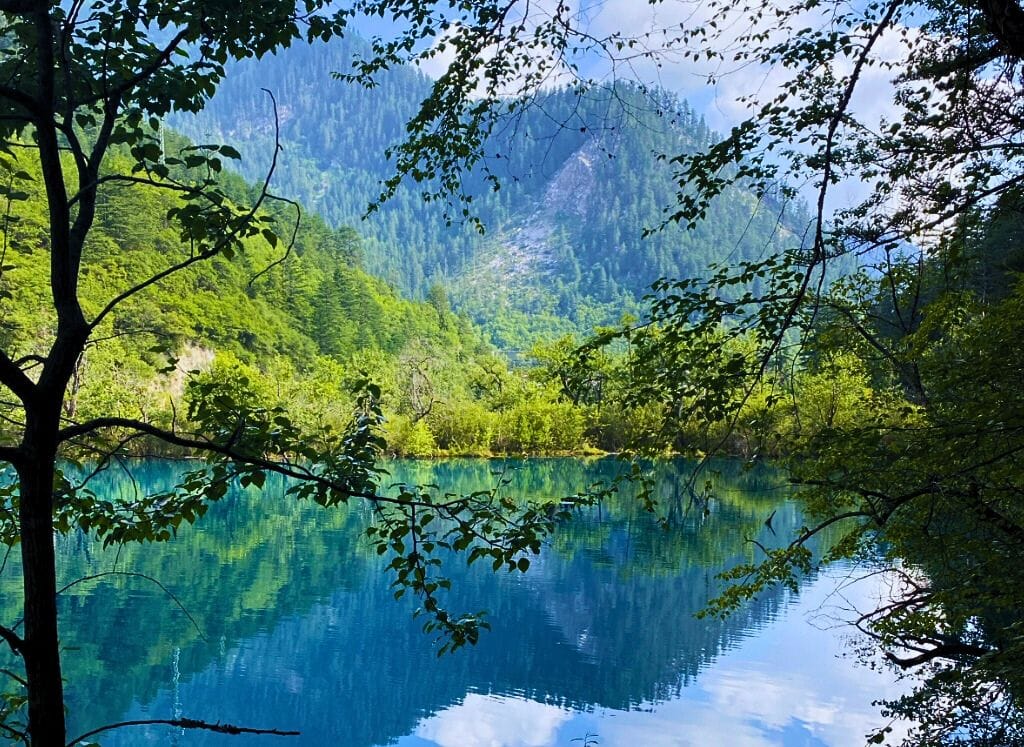
The Huanglong and Jiuzhaigou Parks, both recognised UNESCO World Heritage Sites, are truly natural wonders in the heart of Sichuan.
Just a few hours by train from bustling Chengdu, you’ll find two of the most spectacular national parks in China. Turquoise lakes, lush green mountains, breathtaking trails and Tibetan culture make Huanglong and Jiuzhaigou truly enchanted places.
A quick note: I booked a 3-day tour through Klook.com, but the trip turned out to be a complete disaster. Poor organisation, lack of qualified guides, and several unexpected mishaps made my trip a failure. Despite their remote location, visiting these places on your own is absolutely possible. Thanks to my travel guide, I’ll show you exactly how to explore these enchanting landscapes.
With this 3-day itinerary, you’ll immerse in the Tibetan culture and into the natural wonders in the heart of Sichuan. These incredible destinations are just awaiting for you.
⚠️Disclaimer: Some of the websites below are affiliate links or require a promo code for receving a discount. If you book through them or use my personal promo code at the time of subscription or reservation, I’ll earn a small commission (at no extra cost to you), and you’ll get a discount or a special promotion too. It’s a win–win!
Please be aware that affiliate links may expire and promo codes may reach their usage limit. If you find that a link or code no longer works, kindly let me know. I’ll be happy to share an updated one (if available) directly with you.
Day 1: A (Disappointing) Day inside a Minivan.
The night before departure, they informed me that the guide would not be picking me up from my hotel. I would instead have to reach the meeting point on my own at 6.00 AM
Once there, I joined a small group of six travellers and the driver, who, as I soon discovered, was not a professional guide.
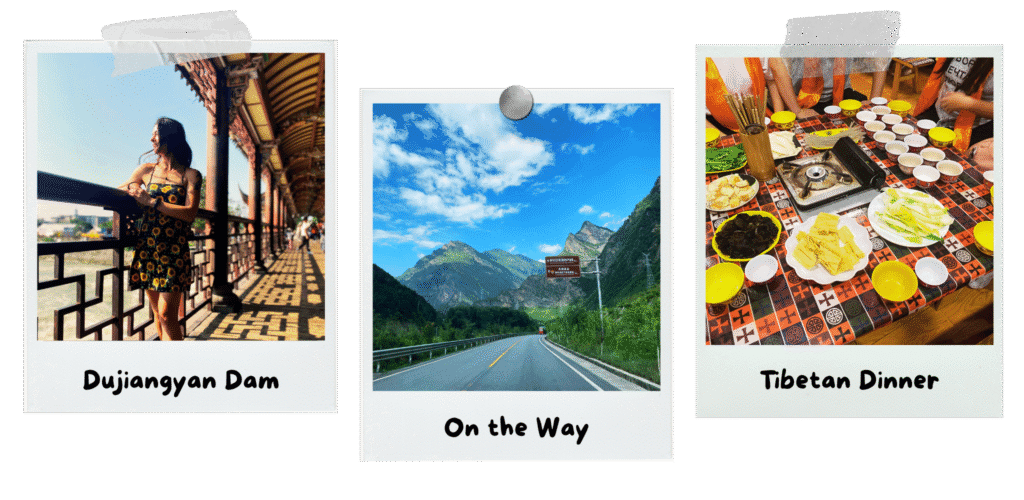
According to the tour itinerary, our first stop was supposed to be the Yefang Panda Research Center in Dujiangyan. However, the driver decided to take us instead to the Dujiangyan Dam. The other participants, who had been informed beforehand, had already purchased their tickets through WeChat. I, on the other hand, hadn’t been notified and had no idea how to buy one. Thus, I could not visit the Dam. Moreover, the queue was already long and we only had about two hours available, so buying the ticket on-site wasn’t an option. I ended up waiting outside, exploring only the surrounding area.
Communicating with the driver was nearly impossible, as he didn’t speak a single word of English. I tried contacting the agency via WeChat, and they assured me we would have visited the panda center. But after several hours on the road and repeated delays, we never made it there.
We spent the entire day inside the minivan. 8 to 9 hours stuck in traffic along narrow mountain roads, without visiting any of the planned attractions. Neither the Panda Center nor the town of Songpan.
Only around 8.00 PM. we finally reached our destination, where we were served a traditional Tibetan dinner featuring hot pot and local dishes. It was an interesting experience, but not enough to make up for such a disappointing day spent entirely inside a minivan.
💡 Suggested Programme.
- h 08.30 – Train from Chengdu to Songpan
- h 11.00 – Arrival in Songpan, visit and lunch in the Ancient Town
- h 16.30 – Bus to Jiuzhaigou
- h 19.30 – Dinner in a traditional Tibetan restaurant
- h 20.30 – Check-in at a Tibetan-style hotel
Giorno 2: Una Giornata al Parco Naturale di Jiuzhaigoui.
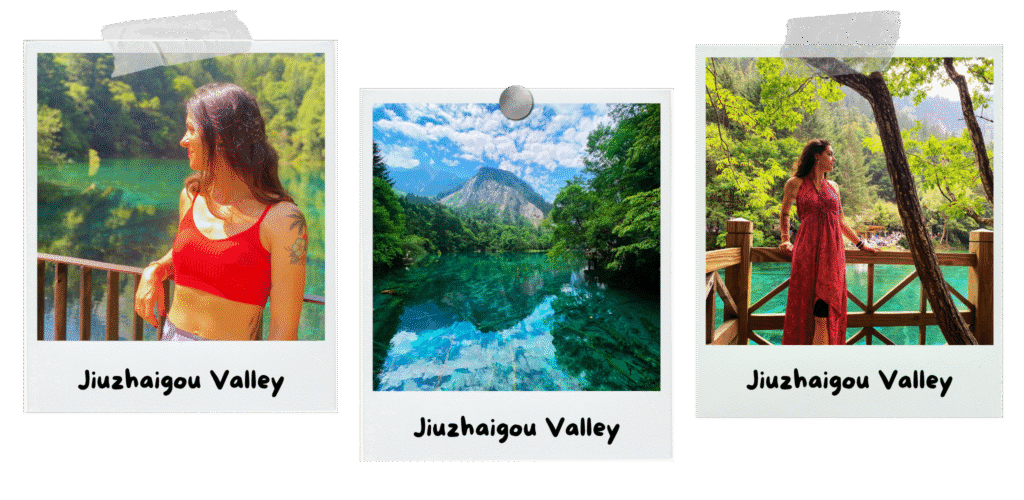
The second day was entirely dedicated to discovering the Jiuzhaigou National Park, famous for its turquoise lakes and dreamlike mountain landscapes. An immersive walk through lush forests and crystal-clear streams allows to fully appreciate the extraordinary biodiversity of this enchanted valley.
Within the park, there are 114 lakes spread across an elevation of over 1,000 meters. According to legend, these shimmering lakes were formed when a young boy gave the goddess Woluo Semo a mirror forged from the wind. The goddess accidentally dropped it, and 114 fragments scattered across the earth, creating the lakes of Jiuzhaigou.
Beyond its breathtaking scenery, the Jiuzhai Valley is home to nine Tibetan villages: He Ye, Jian Pan, Ya Na, Pan Ya, Guo Du, Ze Cha Wa, Hei Jiao, Shu Zheng, and Re Xi, with a total population of about 1,000 inhabitants. This is why the area has such a strong Tibetan cultural influence, visible in its architecture, cuisine, traditional clothing, and local customs.
I highly recommend you to dedicate a full day to exploring this natural wonder. Arrive at the park entrance early in the morning, by taxi or Didi, to enjoy the peaceful atmosphere and the magic of the lakes. And don’t forget to grab a map, as the park is absolutely huge!
💡 Suggested Programme.
- h 07.30 – Arrival at Jiuzhaigou National Park
- h 08.00 – Bus ride to Arrow Bamboo Lake
- h 08.30 – Exploration of Panda Lake, Five Flower Lake, Peacock Riverbed, Pearl Shoals Waterfall, and Mirror Lake
- h 13.00 – Lunch
- h 14.00 – Bus ride to the northern area to visit Long Lake
- h 15.00 – Walk to the Five Colour Pools
- h 18.00 – Return to the starting point with the last bus
Giorno 3: Mattina a Huanglong e Sera a Chengdu.
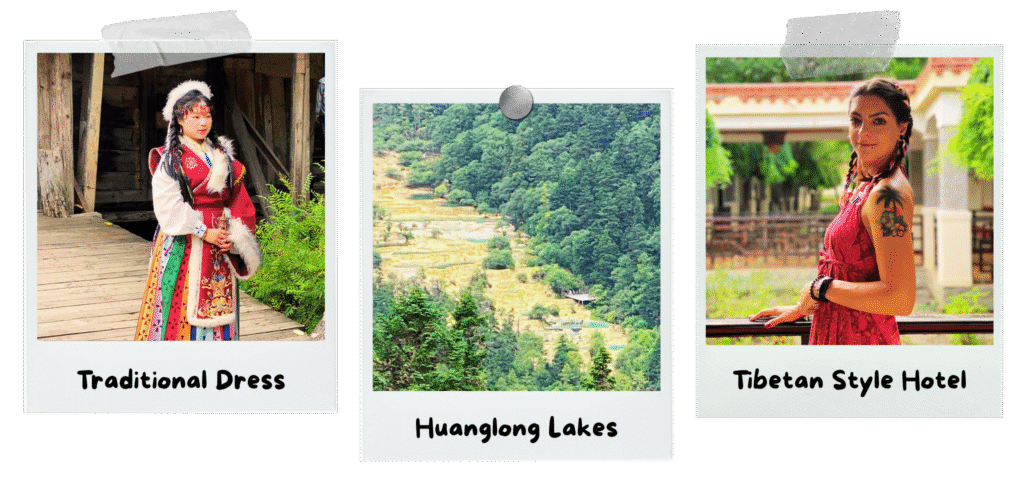
The last day turned out to be, once again, a complete failure. According to the schedule, we were supposed to spend the morning at Huanglong National Park and then leave at midday to return to Chengdu. But, once again, the so-called “guide” proved absolutely useless. He couldn’t even tell me which ticket to buy to visit the Huanglong lakes, and none of the staff at the ticket office spoke a word of English.
There are, in fact, several routes and different entrances, including one connected to a cable car that leads somewhere completely different! Of course, that was exactly the ticket I bought, thinking it would take me to the top of the mountain with a perfect view of the lakes.
But once I reached the summit, I realised there was no view of the lakes at all, and walking to reach them would have been impossible, as we were supposed to leave at noon. On top of that, I had rescheduled part of my trip, instead of returning with the group, I decided to take the high-speed train from Huanglongjiuzhai Station to Chengdu around 2.30 PM. I even had to buy a second ticket to take the cable car back down, wasting more time and money.
By 11.45 AM, I was already at the meeting point, only to find out (through the group chat on WeChat) that the departure had been postponed by an hour without anyone bothering to inform me. Once again, I ended up wasting time, money, and the chance to see an amazing place I had paid to visit.
At that point, furious and exhausted, I asked the driver to return my luggage and decided to head to the station on my own by taxi. Before letting me go, he asked me to type “ok” in a WeChat message as a liability waiver. I did it without hesitation. I honestly couldn’t wait to put an end to that disastrous experience.
💡 Suggested Programme.
- h 08.30 – Visit to Huanglong National Park
- h 17.00 – Train from Huanglongjiuzhai to Chengdu
- h 20.00 – Train from Chengdu to Chongqing (which was supposed to be my next stop before changing plans)
🛏️ Where to Stay in Huanglong and Jiuzhaigou.
I stayed for two nights in a beautiful Tibetan-style hotel located about 10-15 minutes by car from the entrance of Jiuzhaigou National Park.
Unfortunately, I wasn’t able to find the exact name of the hotel, as the ones listed in the Klook.com tour didn’t match the place where I actually stayed.
In any case, on Trip.com you can find plenty of hotels near the park entrance — many of them for under €50 per night, breakfast included.
🎁Usa il codice promo qui sotto per registrarti su Trip.com e ricevere 10€ di sconto🎁
U51IZ5
🍜 What to Eat in Huanglong and Jiuzhaigou.
Do not miss the traditional Tibetan dinner experience, not so much for the food itself, but for the unique atmosphere. At the restaurant where I dined, the evening began with toasts of qingke wine and butter tea, followed by folk dances and live singing performances, and ended with games around the fire shared with other guests.
Jiuzhaigou’s cuisine blends authentic Tibetan flavors with influences from Sichuan traditions. The typical menu includes dishes such as tsampa (roasted barley flour), lamb, highland potatoes, yak cheese dumplings, and of course, the famous Tibetan hot pot. It’s a combination of simple yet genuine flavours that beautifully reflect the culture and warm hospitality of the Tibetan people.
You can choose among the many restaurants in the area, or opt for the dinner package available on Klook.com. Although my experience with Chinese tour operators hasn’t been the best, Klook.com remains an excellent resource for booking tickets and experiences.
Klook.com🎫 Where to Buy Tickets.
You can purchase tickets for entry to the National Parks on-site. For an additional fee, you can also include access to the cable cars and tourist buses that take you from one area to another.
Check the official websites of both parks for the most up-to-date and accurate information on ticket prices and seasonal opening hours.
- Jiuzhaigou: on-site (about €34)
- Huanglong: on-site (about €31)
💡 Travel Tips.
The easiest way to visit Huanglong and Jiuzhaigou is via a tour operator.
But they have to provide a professional guide who coordinates transportation, explains ticket options, and is officially licensed.
At first, I joined a tour because I worried about visiting mountain areas on my own. But as I soon discovered, China is one of the safest and most controlled countries in the world.
Even at such altitude, you’ll find police, metal detectors, cameras, and clear trail signs.
Nevertheless, as you may have guessed from my post, I don’t recommend booking a tour operator for several reasons:
- Prices are high, usually between €200 and €400, often without entrance tickets included.
- The itinerary may not be followed.
- There was no professional English-speaking guide.
- They may charge extra fees (for single rooms, entrance tickets, or schedule changes).
- Too much time wasted on buses or minivans.
How do you visit the Parks of Huanglong and Jiuzhaigou by yourself?
Local airports have limited connections, and train routes between the towns are few. The Huanglongjiuzhai Station serves both destinations but is quite far from Jiuzhaigou.
So, from Chengdu, you can take a high-speed train to Huanglongjiuzhai Station in about 2-3 hours (you can easily book your ticket on Trip.com). From there, you can take a bus to Jiuzhaigou. Alternatively, stop in Songpan, where several buses also connect to Jiuzhaigou (you can check here the schedule online, though it may not be updated). In this area, you’ll find many beautiful and affordable Tibetan-style hotels and restaurants offering an authentic cultural experience.
Travelling on your own allows to explore both parks at your own pace and what you truly want to see. And, after doing the math, it’s also far more cost-effective than joining a group tour.
In my daily itinerary summary, you’ll find a suggested day-by-day plan with approximate times, key stops, and travel tips.
Extra Advice.
I highly recommend staying one extra night near Huanglongjiuzhai Station or Songpan. This way, you won’t feel rushed when visiting Huanglong National Park. Moreover, you can rest after a long day of exploring, rather than facing hours of travel. In fact, neither Huanglongjiuzhai nor Songpan has direct train connections to Chongqing, the next destination of my one-month trip in China (you can read about it in my post 4 Days in Chongqing). You’ll need to return to Chengdu first and then take another train.
If you do decide to go for a Tour Operator.
If you’d rather avoid dealing with transport and logistics, choose a 3-day tour at minimum. Look for one that includes high-speed train travel (not minivans), has English-speaking staff, no hidden costs, and strong reviews especially from international travelers. I can’t personally vouch for the quality, but there are many options available on Klook.com and GetYourGuide.
Klook.com <🎈 Conclusion.
Visiting the Jiuzhaigou and Huanglong National Parks is an experience that stays with you forever.
Despite the challenges and inconveniences, these natural wonders in the heart of Sichuan are absolutely unmissable. Turqoise lakes, lush green mountains and Tibetan culture reveal a different side of China: authentic, pure, and calm.
Whether you choose to travel independently or join a tour, my advice is to approach this journey with peacefully. Let nature speak to you and allow the rhythm of the valley to disconnect you.
💬 And you? Would you explore these stunning places on your own or join a guided tour? Tell me in the comments!
Are you dreaming of your next trip but not sure where to start?
Book a 1:1 travel consultation or request a personalised itinerary and I will design the trip of your dreams!
✨Click the button below for my Travel Services✨