



📜 Introduction.
Can I do an Erasmus experience if I have Type 1 Diabetes? The answer is absolutely yes!
My Type 1 Diabetes story started almost 30 years ago. I’ve been diabetic my entire life, meaning I never had to experience that jarring switch from a “normal” to a “diabetic life”. My mindset was never, “Now that I have diabetes, can I do that?” Instead, it was always, “I can do that, despite my diabetes.”
Before starting university, I had already lived in London for 18 months. Thus, being independent and far from home wasn’t a novelty for me. Once I returned to my hometown in Italy in 2015, I enrolled in university and immediately applied for every possible scholarship to study and live abroad.
Ultimately, I managed to complete 5 different Erasmus!. Yes, despite my illness! In this post, I want to share my story and reassure you that you can absolutely do an Erasmus experience if you have Type 1 Diabetes.
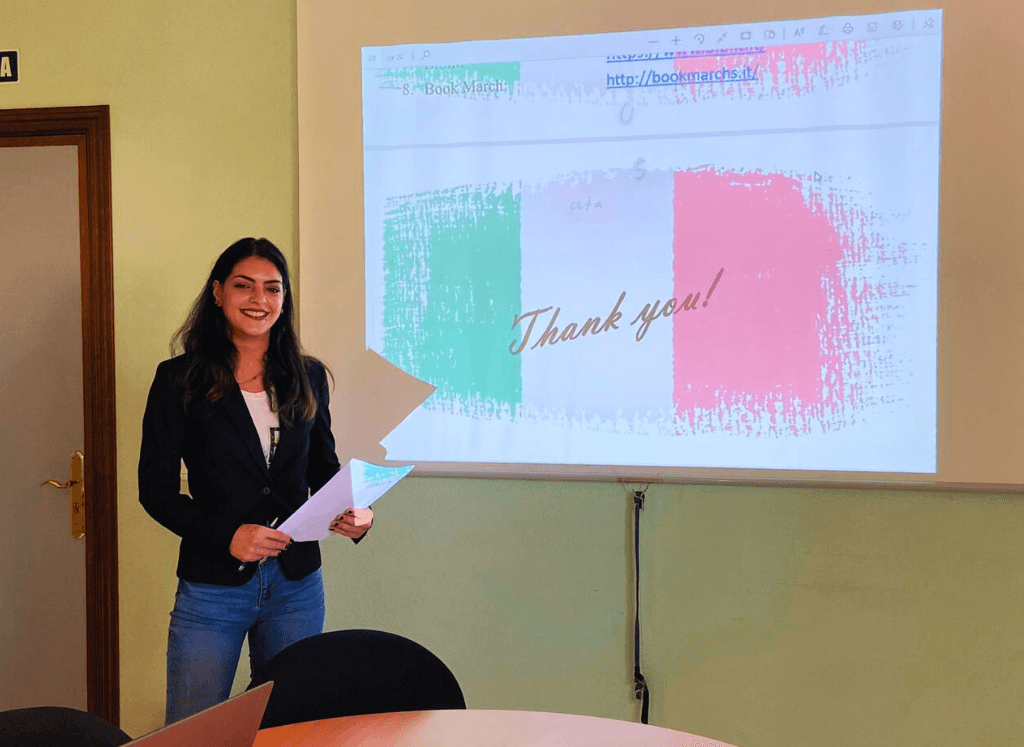
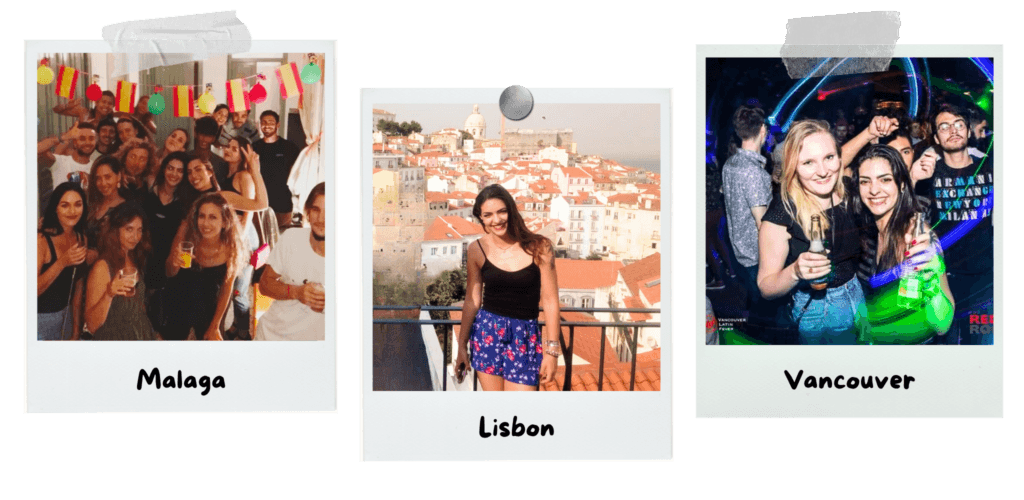
🇪🇸 First: Erasmus+ Studio in Malaga (Spain).
My very first Erasmus experience was in Malaga. It lasted five months, from February to July 2018. It was simply one of the most enriching and fun experiences of my life!
During my Erasmus, I managed to maintain a regular lifestyle. I didn’t skip meals or overeat at dinner parties, I took my insulin correctly and at te right time. Furthermore, I kept up with my regular check-ups and even did a few blood test. At the same time, I didn’t miss out on the fun enjoying parties, late nights, clubs, white wine, and weekend getaways, including a trip to Morocco.
I arrived in Spain with a 6-month insulin supply, even though my Erasmus lasted 5 months. Later, my mum sent two boxes with clothes, shoes, needles, and test strips. That kept me fully covered for the entire stay.
🇵🇹 Second: Erasmus+ Traineeship in Lisbon (Portugal).
For my second adventure, I did a summer traineeship in Lisbon. I had just returned from Malaga, took a few exams, and moved to Portugal just ten days later!
Summer in Lisbon was quieter. The universities were closed, and fewer students were around. Moreover, I was actually working for a company and writing my thesis. There were no crazy parties, wild drinking games, or big international events.
However, it was a highly formative experience. My daily routine wasn’t disrupted at all, so I was able to manage my diabetes as I do at home. Since I stayed for less than three months, I simply brought the right amount of medical supplies (strips, needles and insuline) with me in my luggage.
🇨🇦 Third: Globus Placement in Vancouver (Canada).
This wasn’t a traditional Erasmus, but a specific programme at my university (Università degli Studi di Cagliari) called Globus Placement. Thanks to this scholarship, I funded a post-grad placement in Vancouver for 4 months!
However, Canada isn’t in Europe and it is not as Europe, so things were a bit different. My endocrinologist provided a detailed medical certificate. It stated how much insulin I carried, my dosage needs, and my length of stay.
Like Lisbon, my experience in Vancoouver was more formative than fun. Overall, I can say that my time in Canada was quite pleasant. However, the extreme winter cold damaged my insulin during a Christmas trip to the French part of Canada. This sadly led to DKA and I spent one week hospitalised. Luckily, I recovered fully with no lasting consequences and I could continue my journey in Vancouver. You can read the full story in my post: 4 Months in Canada: My Post-Grad Placement and DKA Experience.
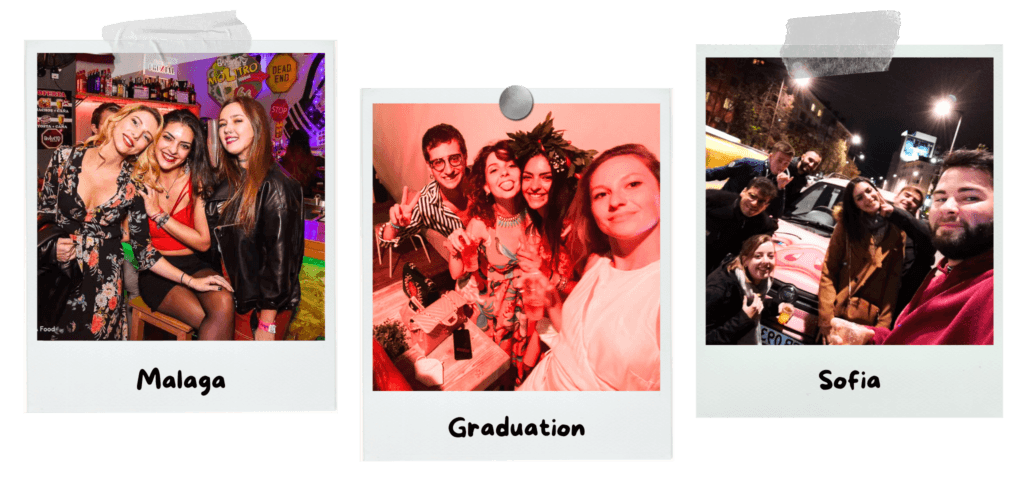
🇪🇸 Fourth: 1st Year Erasmus Mundus in Malaga (again!).
Whilst in Canada, I applied for an Erasmus Mundus scholarship. This European programme funds a two-year Master’s degree where you enrol as a full student, not just an Erasmus student. Every year, there are several Masters available funded by the Erasmus Mundus scholarships. These involve both Universities in Europe and in Extra European Countries, plus companies and and other partners. You spend each year in a different country of the partner Universities and moreover, you can even undertake a placement at some partner companies.
My Master was related to Translation and Interpreting Technologies, and I could choose two out of three Universities of the Consortium, located in Malaga, Sofia and Wolverhampton. So, I headed back to Malaga for the academic year 2019-2020! Sadly, that was also the year COVID-19 hit. The first semester was indeed great but then the virus struck, and I spent the second semester mainly locked down with my flatmates.
For what concern my diabetes, I had arrived in August 2019 with enough insulin for the first few months, and I brought more back after a quick Christmas trip home. Moreover, during the pandemic, my mum tried posting me needles and strips, but the parcel got lost! Thankfully, I never ran out of insulin or other supplies.
🇧🇬 Fifth: 2nd Year Erasmus Mundus in Sofia (Bulgaria).
The second year of my Master’s and last Erasmus experience took place in Sofia, Bulgaria, from September 2020 to July 2021. Just like in Spain, I arrived with plenty of supplies. Halfway through my stay, I had another box delivered with insulin too as I could not go back to Italy due to Covid restrictions. This time, the parcel actually arrived!
As we were in full lockdown, I attended online classes so I didn’t have to go to the University in person. Still, I made a fantastic group of Erasmus friends. Bulgaria had fewer restrictions than Italy or Spain at the time. We found a few “underground” bars, hosted house parties, and travelled extensively in Bulgaria. We also visited Romania, North Macedonia, and Istanbul. I even took a solo trip to Cyprus and Crete in early June before exams!
Fun fact: during this Erasmus, I had a brief romance with another guy who had T1D. It is rare to meet fellow Type 1 diabetics, so it was nice to connect with someone who truly understood the lifestyle.
💡 Travel Tips.
- Pack Heavy. Always pack enough supplies (insulin, sensors, CGMs, needles) for your first few months. Always carry them in your hand luggage!
- Restock Smartly. Have family or friends bring extra supplies when they visit, or stock up if you nip home for a short holiday. It is not indicated to ship medicines, especially insulin.
- Get a Certificate. Carry a doctor’s medical certificate translated into English.
- Communicate. Keep your insulin safe in the fridge. Tell your new flatmates and friends about your condition. Explain why the insulin must stay cool, and ensure they know what to do on nights out in case of emergency.
- Insurance. In the EU, your European Health Insurance Card (EHIC) gives you the right to medical care. However, you cannot simply walk into a pharmacy and get insulin, not even if you pay. In this case, you need to go to the hospital. If studying outside the EU, comprehensive health insurance is absolutely vital.
For more detailed advice, read my guide on travelling long term with T1 Diabetes.
💙 My Advice.
First and foremost: diabetes should never be a limit for you. You can achieve all your goals despite this condition. You just do it on your own terms and in your own time. Live this experience free from the mindset of being “sick” and enjoy every moment. Do not miss out on opportunities out of fear.
Keep checking your blood sugar, don’t skip meals, and don’t forget your insulin. You don’t have to change your habits; just adapt them to a new routine!
Ensure someone nearby knows how to help in a medical emergency, and keep your family updated. If an emergency happens, don’t panic. If your insulin runs out or spoils, go straight to a local hospital. You can also contact the Erasmus coordinators at your home and host universities for help.
Lastly, when taking weekend trips, always pack far more supplies than you think you need! I discuss this more in my post travelling with T1 Diabetes.
🎈 Conclusion.
My 5 Erasmus experiences gave me the chance to prove myself. I lived in incredible countries, studied at great universities, and made lifelong international friends. It is a priceless experience that opens your mind to what else is out there.
If you are still asking yourself, “Can I do an Erasmus experience if I have Type 1 Diabetes?” the answer is yes. Apply for that scholarship, join that exchange programme, and go explore the world!
💬 And you? Have you done an Erasmus exchange programme yet, or are you thinking of applying for one? Tell me everything in the comments!
Want to stay updated with my latest itineraries, receive practical guides and unique travel tips, and enjoy exclusive discounts on hotels, flights, and activities?
✨Click the button below and join my community of travel girls!✨