



📜 Introduction.
Living and especially travelling with Type 1 Diabetes is a daily challenge. However, it should never become a limit or an obstacle to your dreams. For me, travelling has become a way to push my boundaries, encourage myself to try new experiences, and prove that I can do everything others do, and even more.
Between long flights, unpredictable meals, and hectic rhythms, every trip has taught me something new about managing the condition. Over time, I’ve learnt that with a bit of organisation and awareness, you can go anywhere. And do anything: live abroad, climb a mountain, volunteer, or even take on extreme adventures. Of course, with the right preparation and precautions.
In this post, I want to share my personal experience: from my early diagnosis to the challenges I’ve faced while travelling, in the hope of giving you a little courage if you ever feel held back.
😓 The Diabetes Diagnosis.
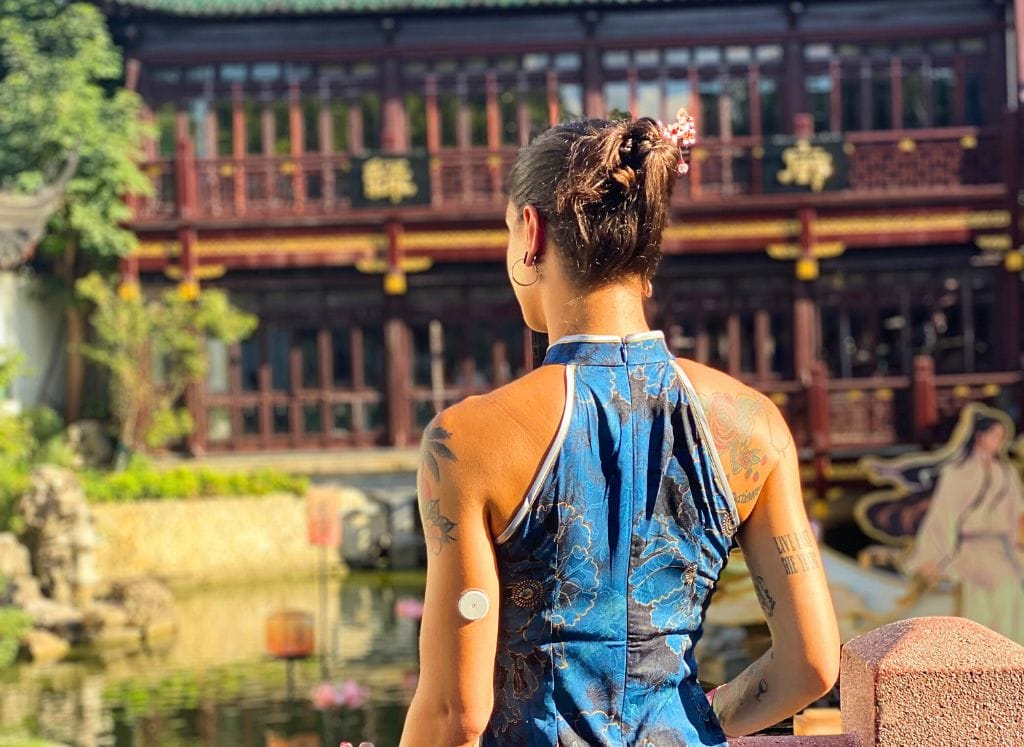
I’m 33 years old now, and I’ve been living with Type 1 Diabetes since I was just 5. I barely remember what life was like before diabetes. The diagnosis came early, so it has always been part of my daily routine. It hasn’t been easy, but it never stopped me from living extraordinary experiences: from university exchanges to volunteer projects, to backpacking adventures all around the world.
Back then, we didn’t have the advanced technology we have today. And above all, there was very little awareness about disabilities especially about so-called invisible illnesses and the struggles of those living with chronic conditions. I didn’t receive any real support, neither psychological nor medical, and at school there were episodes of bullying and isolation that deeply affected me during those years.
Luckily, things are changing now. There’s more information, more empathy, and most importantly, tools that make managing the condition easier and less limiting.
😵💫 Basedow and Graves’ Disease.
When I was twenty, I decided, quite literally, to run away from home and move to London. I needed freedom, independence, and the feeling of standing on my own. But to be honest, I wasn’t ready at all, and I only stayed for a week. I like to think of that experience as the high school trip I never had.
Two days after returning home, I started feeling very sick. I ended up hospitalised for a week, where I was diagnosed with Basedow and Graves’ disease, a form of hyperthyroidism. After years of dealing with diabetes and all its complications, I wasn’t too shocked. The symptoms — tachycardia, fatigue, insomnia, mood swings — were annoying, but the treatment was simple: two pills a day. Nothing compared to the complexity of managing diabetes.
Five years later, though, things became less stable. My endocrinologist advised me to permanently remove my thyroid through a radioactive iodine pill, as my hormone levels kept fluctuating. Since 2019, I’ve been living with induced hypothyroidism. I take my Eutirox every morning, and fortunately, managing it is now simple and stable.
🤔 Living with Two Autoimmune Diseases.
Living with two autoimmune diseases isn’t easy. It means coexisting with a body that sometimes seems to work against you. There are moments of fatigue and frustration, days when I wake up with low blood sugar and barely have the energy to get out of bed. But all the challenges that come with diabetes have also given me incredible strength and determination. Managing both diabetes and hypothyroidism requires balance, discipline, and self-awareness.
Over time, I’ve learned that these conditions are not just diagnoses: they’re part of me, but they don’t define me. Learning to live with them has made me more aware, resilient, and grateful for what I’m able to do every day.
If you also live with a chronic illness or severe disability, I won’t tell you it’s easy to travel or take on extraordinary adventures. My conditions, though serious and sometimes draining, still allow me to be independent without needing assistance. I just have to take precautions, always be prepared for the worst, stop when my body needs it, and carry my life-saving medication everywhere I go. On that note, I suggest you read my post Tips for Travelling Long-Term with Type 1 Diabetes.
😖 My (Bad) Travel Experiences Related to Diabetes.
Having travelled extensively over the last 12 years, lived in six different countries, and completed two long backpacking journeys, I’ve collected quite a few challenging experiences related to Diabetes. I’m sharing them here as a reminder to always pay attention, even to the smallest details that can impact your trip and your health.
Burgos (Spain).
It was 2016. I was in Burgos attending a summer event called Summer University, organized by AEGEE, a European student association. Halfway through the trip, my Humalog pen jammed and stopped working. Apparently, a grain of sand had gotten into the mechanism during a beach day. Without a new prescription and considering the high cost of insulin, I was forced to use syringes temporarily. Those were tense days — insulin is delicate, and even a small mistake could have been dangerous.
Ottawa (Canada).
During my internship in Vancouver, I decided to spend Christmas in the French Canada since the office was closed. The cold was extreme, and my insulin completely spoiled. At the same time, I got pneumonia and sepsis, which led to diabetic ketoacidosis. I was alone, far from home, in a country where healthcare is expensive, with high fever, coughing, and vomiting. Thankfully, a guy from the hostel, whom I barely knew, took me to the hospital and watched over my bags. If it hadn’t been for him, I’m not sure what would have happened. Just to be admitted to the ER, I had to pay CAD 900 (about €600). The final bill was over CAD 13,000, but except for the deductible, everything was covered by my travel insurance.
Batumi (Georgia).
During a 10-day trip in Georgia, I had planned to use only one sensor since it lasts 15 days. But as soon as I arrived in Batumi, the sensor came off while I was changing into my pajamas. Panic! Luckily, I quickly bought a new glucometer and test strips at a local pharmacy, without prescription. However, I had to limit my blood checks because the strips were quite expensive.
Ban Khwao (Thailand).
Thailand was one of the most intense and beautiful times of my life: three months backpacking across Asia, mixing exploration and volunteering. During that time, I was teaching English in a kindergarten in a small village, far from everything. I asked the coordinator to keep my insulin and sensors in her fridge. She agreed, but a week later, when I needed a new pen, I discovered she had moved the bag to the freezer. My entire three-month supply was ruined. No one seemed to take responsibility or even understand the seriousness of what had happened. Thankfully, a French couple volunteering with me took me to the hospital, where I was able to buy a full new supply. The insurance covered the cost — not as a medical expense, but as damaged luggage.
Kuala Lumpur (Malaysia).
In Malaysia, things went better though I still had a scare. I kept my insulin in the hostel fridge, and I had an early morning flight to Vietnam. When I went to get it, the kitchen was locked, and there was no staff around. After several attempts, I called the emergency number. Eventually, someone woke up (not too happily) and opened the kitchen. It was a small incident, but a reminder that when you travel with diabetes, you can’t take anything for granted.
🎈 Conclusion.
Travelling with Type 1 Diabetes can be scary, especially for extended periods. But if there’s one thing I’ve learnt, it’s that fear should never become a limit. With the right preparation, a bit of courage, and mindfulness, you can go anywhere.
Every trip is an act of trust: in yourself, your body, and the world. There will be setbacks, yes, but also moments of pure freedom that make every effort worthwhile. Don’t wait to feel “ready.” Go, even with your fragility. You’ll discover that it’s not an obstacle, but part of your path.
Living with a chronic illness like Type 1 Diabetes doesn’t mean giving up on your dreams. It just means learning to chase them differently — and maybe, even more fiercely.
💬 And you? Have you ever felt that Type 1 Diabetes was holding you back from your dreams or your desire to travel?
Want to stay updated with my latest itineraries, receive practical guides and unique travel tips, and enjoy exclusive discounts on hotels, flights, and activities?
✨Click the button below and join my community of travel girls!✨