



Last Updated on September 10, 2026 by Nadia Halfway
📜 Introduction.
Nestled among mystical mountains and ancient villages, Wangxian Valley is one of the most enchanting destinations in China.
This magical place blends fairytale landscapes, centuries-old traditions and an atmosphere that feels suspended in time. Perfect for a brief escape, it’s ideal for travellers seeking an experience far from China’s bustling megacities.
In this 2-day itinerary, I’ll take you through Wangxian Valley, from a night-time visit to a daytime exploration among mystical mountains and ancient villages.

⚠️Disclaimer: Some of the websites below are affiliate links or require a promo code for receiving a discount. If you book through them or use my personal promo code at the time of subscription or reservation, I’ll earn a small commission (at no extra cost to you), and you’ll get a discount or a special promotion too. It’s a win–win!
Please be aware that affiliate links may expire and promo codes may reach their usage limit. If you find that a link or code no longer works, kindly let me know. I’ll be happy to share an updated one (if available) directly with you.
Day 1: Arrival and Night Visit at the Valley.
Reaching Wangxian Valley is easy, but you cannot arrive directly by train as the nearest railway station is Shangrao. I travelled from Nanchang and reached Shangrao in just over an hour. From there, I took a bus to Wangxian Valley.
Once I arrived, I headed straight to my hotel with a Didi to drop off my luggage. After checking in, I returned to the Valley for an evening stroll through the illuminated lanes, red lanterns, suspension bridges and wooden houses clinging to the mountainsides. A truly magical atmosphere, but very crowded.
The area comes alive after dark: traditional restaurants, street food stalls, bars, pubs and venues with live music and karaoke line the lanes one after another, giving the valley a surprisingly lively, almost festive atmosphere.

Day 2: Day Visit at the Valley.
For day 2, I set out early, before the valley had properly woken up. The lanes were quiet, the lanterns still lit from the night before, and the whole place was almost empty.
I walked the panoramic paths slowly, ducked into the small wooden houses perched on the cliffsides, and stopped whenever something caught my eye. I was also able to take my time visiting the Museum of Paper and Calligraphy, which traces the evolution of writing.
And best of all, there were none of the crowds and evening bustle.

🛏️ Where to Stay in Wangxian Valley.
I spent two nights at Shiguang Light Luxury Homestay (Wangxiangu Scenic Area), located just a short distance from the scenic zone. It was the most welcoming hotel I have ever stayed in.
The owner was incredibly kind and helpful. She let me use her kitchen (and her food!) to prepare dinner, offered to drive me to and from the valley, and before I left she made sure I had food and water for the journey.
For a double room with private bathroom and breakfast included, I paid around €60.
🎁 Use the referral code below or register via Trip.com to unlock your €10 discount 🎁
U51IZ5
🔽 If you are looking for another type of accommodation, you can explore plenty of options in Wangxian Valley using the map below 🔽
🍜 What to Eat in Wangxian Valley.
The cuisine here is rooted in Jiangxi mountain cooking and feels a world away from the polished restaurant menus of China’s big cities.
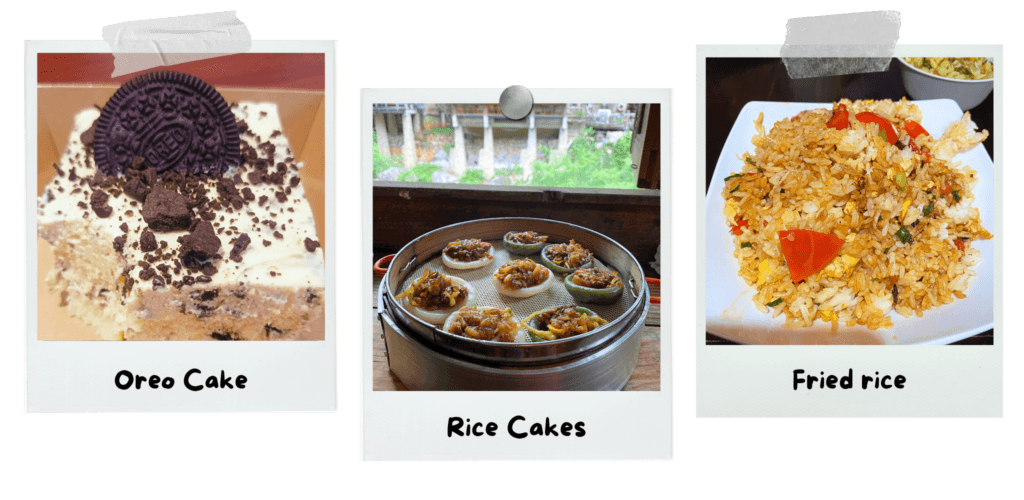
Inside the scenic area, Baiwei Food Street is the main hub for food and drink. It runs through the heart of the valley and is lined with traditional restaurants, street food stalls, small bakeries, ice cream shops, local wine bars and pubs with open terraces looking out over the valley. In the evening, when the lanterns come on and the crowds fill the lanes, it becomes the social heart of the entire place. The must-try dishes are spicy tofu, handmade noodles, and rice cakes.
Food inside the scenic area is slightly more expensive than at stalls and local restaurants just outside the entrance. If you are on a tight budget, eat breakfast and dinner outside and save the Baiwei Food Street experience for a snack or evening drink.
🎫 Where to Buy Tickets.
I bought the entrance ticket to the scenic area of Wangxian Valley on site. It costs around €15 and I bought two: one for the night visit and one for the exploration the following day. You cannot enter, leave and re-enter Wangxian Valley with the same ticket, even on the same day. If you exit, you’ll need to buy another entrance.
In case you are based in Shangrao and want to either join an organised tour or visit other places nearby, Klook offers day trips that cover Wangxian Valley, Huangling Village, or even both on the same day.
Klook.com🎁 Subscribe via Klook.com to receive €5 off your next booking 🎁
🚌 Getting to Wangxian Valley.
Wangxian Valley is located in Jiangxi Province. The easiest way to reach it is by high-speed train but to Shangrao station as the are no trains here at the valley. The train journey from Shanghai is roughly 1.5 hours, and from Nanchang (where I was previously) is approximately 1 hour.
From Shangrao station, take a local bus or arrange a taxi directly to the valley. The bus fare is minimal and payable with Alipay or WeChat Pay at the station. Journey time from Shangrao to the valley is around 40 minutes to 1 hour depending on traffic.
📅 Best Time to Visit Wangxian Valley.
Wangxian Valley is beautiful year-round, but autumn (September-October) is the standout season. The foliage turns deep shades of red and gold, the evening illuminations reflect off wet stone, and the air is cool enough to make the fire shows even more spectacular.
Spring (April–May) is lush and green, with fewer crowds and pleasant temperatures. Summer brings heat and humidity but also the best conditions for river rafting. Winter is cold and quiet: the valley empties of tourists almost entirely, which has its own appeal if you prefer solitude.
Avoid Chinese national holidays at all costs: the Golden Week in early October and the May Day break in early May bring enormous crowds to every scenic area in Jiangxi.
💡 Travel Tips.
When is the best time to visit Wangxian Valley: during the day or at night? This is perhaps the most important question regarding this place, and my personal answer is both during the day and in the evening.
The daytime visit reveals the architecture in full: the wooden houses, the river winding through the gorge, the scale of the rock formations. The walking trails are easier to navigate and the surrounding scenery is at its most expansive. Moreover, there are usually not many people.
The night visit is something else entirely. The entire valley is illuminated with lanterns, coloured lights and fire performances. It is theatrical, slightly surreal and genuinely unlike anything I have seen elsewhere. The atmosphere after dark is the reason most people remember Wangxian Valley.
If you don’t want to pay for the ticket twice, my advice is to spend the whole day at the scenic area, from morning until dark. Start early exploring the paths, visit the interiors of the wooden houses, cross the bridge connecting the valleys and try the river rafting experience. Make sure to wear comfortable shoes and bring a change of clothes. Don’t miss the lights switching on at sunset, the fire-breathing shows and the illuminated waterfall.
❓ FAQ.
Wangxian Valley is a scenic area in Jiangxi Province, China, known for its ancient wooden villages built directly into cliffsides, its river gorge, and its spectacular evening illuminations with lanterns and fire performances.
Yes. It is unlike other places in China and the combination of the architecture, the landscape and the night show makes for an unforgettable stop.
Take the high-speed train from Shanghai to Shangrao for around 1.5 hours. From Shangrao, take a local bus or a Didi taxi to the valley, and you’ll arriverai in approximately 40 minutes to 1 hour depending on the traffic.
Both moments of the day is worth to visit the scenic area. The day visit reveals the architecture and landscape in full. The night visit offers fire shows, lanterns and a completely different atmosphere.
Yes, rafting on the river inside the scenic area is available, particularly in warmer months. Check availability when you purchase your entrance ticket, as it may be seasonal.
🎈 Conclusion.
Wangxian Valley is a true hidden gem in the heart of Jiangxi. It’s a place where nature, culture, and spirituality come together among mystical mountains and ancient villages.
Even though it can feel a bit artificial now instead of like an authentic Chinese village , it is still completely worth a visit. Make sure to clear your schedule to spend at least a whole day here!
My 1-month journey across China has almost come to an end, so make sure to check out my final destination blog post: 5 Days in Shanghai.
💬 And you? Have you ever visited a traditional valley or village in China? Tell me about it in the comments!
☕ Did you find this post helpful? If you’d like, you can support my blog by treating me to a virtual coffee!

Are you dreaming of your next trip but not sure where to start?
Book a 1:1 travel consultation or request a personalised itinerary and I will design the trip of your dreams!
✨Click the button below for my Travel Services✨
