


Last Updated on September 11, 2026 by Nadia Halfway
📜 Introduction.
We all love animals. For many of us, the highlight of travelling to a new country is the chance to see its unique wildlife up close. But there is a dark side behind those “perfect” photos.
Behind the selfies, the rides, the baths and the shows, there is often a hidden world of cruelty, sedation, and exploitation. As responsible travellers, it is our duty to ensure our curiosity doesn’t come at the cost of an animal’s suffering and to practise ethical tourism.
If you love animals, leave them wild. In this comprehensive guide, I will walk you through what to avoid and how to travel ethically to stop supporting animal cruelty.
⚠️Disclaimer: Some of the websites below are affiliate links or require a promo code for receiving a discount. If you book through them or use my personal promo code at the time of subscription or reservation, I’ll earn a small commission (at no extra cost to you), and you’ll get a discount or a special promotion too. It’s a win–win!
Please be aware that affiliate links may expire and promo codes may reach their usage limit. If you find that a link or code no longer works, kindly let me know. I’ll be happy to share an updated one (if available) directly with you.
📌 Asia: The Epicentre of Wildlife Tourism.
Asia is famous for its incredible biodiversity, from misty jungles to remote mountain ranges. Unfortunately, this rich ecosystem also makes it home to some of the cruellest tourist traps involving animals. Millions of visitors flock here every year chasing that perfect photo with an elephant, a tiger, or a slow loris. Behind almost every one of these encounters lies a story of captivity, sedation, or brutal training. From the mountains of Sri Lanka to the jungles of Indonesia, wildlife exploitation is deeply woven into the continent’s booming tourism industry.
🐘 Elephants (Thailand, India, Sri Lanka, Laos, Cambodia).
Elephants are probably the most abused animals involved in tourist activities. To accept a rider, an elephant must undergo the Phajaan (the crush), a brutal process where their spirit is broken through torture. The crush involves separating a baby elephant from its mother, keeping it in isolation, depriving it of food and water, and beating it repeatedly until it is broken enough to be controlled by fear.
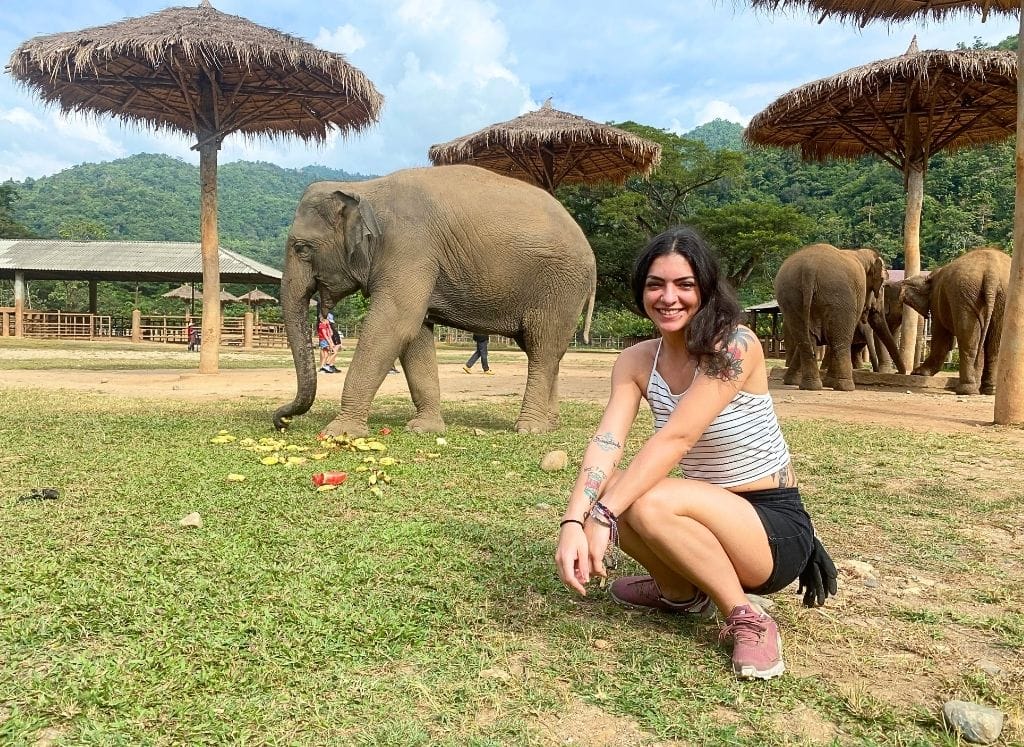
Even the “bathing experience” is stressful, as elephants are forced to stay in the water for hours with crowds of people. In India, temple elephants are often chained and forced to walk on hot asphalt. So, no riding, no bathing, and of course, no circus shows! Instead, choose a rehabilitation centre or an ethical sanctuary, such as Elephant Nature Park.
🐼 Giant Pandas (China).
According to the IUCN Red List, the giant panda has been downgraded from “Endangered” to “Vulnerable”, but it does not mean pandas are safe. Pandas are naturally solitary animals that avoid contact even with their own kind, except for mating. Being handled by tourists and passed around for photos exposes them to human diseases (like the flu, which can be deadly for them) and causes significant stress. Ethical conservation centres minimise human contact to prepare them for potential release, whereas facilities offering “hugs” are prioritising profit over the animals’ welfare. If you really want to see pandas in China, choose an ethical sanctuary or research centre where you can observe the animals in a free, tranquil space.
🐅 Tigers and Big Cats (Thailand, China, India).
If a tiger or any other feline is calm enough to sit for a photo with you, it is highly likely they have been sedated, drugged, or made fearful of punishment. Tiger Temples and circuses are places you should definitely avoid, too.
🐒 Monkeys (India, Indonesia, Thailand).
Macaques are often chained, trained through pain to “dance,” or wear clothes. Moreover, feeding wild monkeys (like in Bali or Thailand) disrupts their natural diet and makes them aggressive and fat and difficult for them to move with agility.
☕ Civet Cats (Indonesia, Vietnam).
These shy, nocturnal animals are kept in battery cages and force-fed coffee cherries to produce expensive coffee. Avoid “Kopi Luwak” (Civet Coffee) tours, just enjoy a traditional coffee instead.
🐻 Bears (Pakistan, India, Russia).
The bears used for “Dancing Bear” shows often have their teeth removed and their sensitive muzzles pierced with hot needles to control them. Attending a show that humiliates an animal is not funny, and you shouldn’t support it.
🐍 Snakes and Cobras (India).
Walk away from snake charmers. Many snakes and cobras have their fangs removed or their mouths sewn shut to avoid the bite. They are often dehydrated and drugged to remain lethargic. There is no magic behind it, just cruelty.
🐴 Horse Treks (Mongolia, Central Asia).
While horses are central to nomadic culture, the tourism boom has led to abuse. Animals are often saddled for unsuspecting tourists who are too heavy for the local breed’s small frame. They are frequently overworked on long treks without proper rest, hydration, or veterinary care.
🌊 Swimming with Manta Rays (Indonesia).
Manta rays are gentle giants, but curious tourists often try to touch them or grab their fins. This removes the protective mucus layer on their skin, leaving them vulnerable to serious infections and diseases. If you do go snorkelling to see them, please do not touch or chase them!
🦧 Orangutans (Indonesia, Thailand).
These highly intelligent primates are forced to act like humans for entertainment, especially in “boxing” shows, where they mock-fight for crowds. Also avoid the “breakfast” experiences, where young orangutans are separated from their mothers at an early age and trained to sit still for hours, often kept in small cages when not “working”.
🐒 Slow Loris (Thailand, Vietnam, Philippines).
Say no to photos with these small, big-eyed primates on the street. They are venomous, so poachers painfully clip or pull out their teeth without anaesthesia to make them safe for tourists to hold. When they raise their arms during “tickling”, they are actually terrified and trying to gather venom from glands under their arms to defend themselves.
🪿 Ducks and Geese (Vietnam).
A new trend has been taking over social media: visiting so-called “Duck Farms” in Vietnam. These have been popping up all over the country ever since the first “Duck Stop” in Phong Nha went viral. Ducks and geese are naturally shy animals, and forcing them into constant, close contact with large, noisy crowds causes them significant chronic stress.
The main draw at these farms is the so-called “duck massage”, which relies entirely on the animals being hungry enough to swarm tourists in search of food. This can disrupt their natural feeding cycles and cause nutritional imbalances, since they are fed by tourists all day long. What’s more, even though it’s marketed as a natural interaction, the ducks are actually trained to chase tourists or perform specific actions in exchange for food, turning them into little more than photo props rather than farm animals free to move as they please.
📌 Africa: Not Just a Safari.
Africa offers breathtaking landscapes and some of the planet’s most iconic wildlife, from lions roaming the savannah to elephants crossing ancient migration routes. Sadly, growing commercialisation is putting immense pressure on these very animals that draw travellers here in the first place. Beyond the classic safari, a darker industry thrives: cub petting, camel rides, and unregulated shark encounters that prioritise profit over welfare. Many of these practices are hidden behind seemingly harmless activities marketed to unsuspecting tourists. Choosing responsible operators here isn’t just an ethical preference, it can genuinely determine whether an animal lives free or ends up exploited for life.
Another appalling practice in Africa, of which you are no doubt aware, is hunting. Here, sport and commercial trophy hunting is still practised in many countries in sub-Saharan Africa, as it generates millions in revenue. However, it is severely restricted by rigid quotas, a growing number of local bans and international restrictions on the import of animal remains.
🦁 Lion Cubs (South Africa).
This is the darkest secret of African tourism. Cubs used for petting are often taken from their mothers days after birth. When they get too big to pet, they are sold into the “canned hunting” industry to be shot by trophy hunters in fenced areas.
🐫 Camels and Dromedaries (Morocco, Egypt, Tunisia).
These animals are often overworked, carrying heavy tourists in scorching heat with little water. They are frequently beaten to force them to stand or kneel. Often, they are tied together with ropes that pierce their nostrils or tethered by the neck to keep them in a line. I personally witnessed this during my Erasmus trip in Morocco.
🐢 Marine Turtles (Zanzibar, Cape Verde, Mauritania, and many others).
Picking up or touching turtles causes them a great deal of stress, as well as exposing both parties to the risk of bacterial transmission between them.
🚙 Unethical Safaris (Kenya, Tanzania, South Africa).
Surrounding a cheetah whilst it is hunting with several vehicles causes it extreme stress and often forces it to abandon its prey. Remember always to keep your distance and to avoid tour operators who do not follow the rules or who chase the animals.
🦈 Shark Cage Diving (South Africa).
Avoid operators that use “chumming” (throwing blood or bait into the water). Baiting sharks conditions them to associate humans and boats with food, altering their natural hunting patterns and making them potentially dangerous to humans and themselves.
📌 The Americas: Exotic Selfies.
From the Amazon rainforest to the Andes and down to North America, the continent hides an entire industry built around turning wild animals into photo props. Unethical operators pull sloths, parrots, and baby llamas straight from their natural habitats, then force them into busy city streets or roadside stalls for a few pennies. Tourists chasing a cute social media moment rarely realise the toll it takes, from raised heart rates in sensitive sloths to starfish suffocating out of water. In fact, marine life fares no better, with intrusive whale-watching boats and careless handling causing lasting harm. A little awareness goes a long way towards protecting these ecosystems.
🦙 Llamas and Alpacas (Peru, Bolivia)
Often, behind a souvenir photo lies a cruel reality: puppies torn away from their mothers far too soon and dragged through the chaotic streets of cities such as Cusco. There, they are kept tied up for hours, left thirsty and forced to wear uncomfortable clothes, all just to scrape together a tip. So, please say no to photos with dressed-up animals in South American cities.
🦥 Sloths (Costa Rica, Brazil, Amazon)
Sloths are incredibly fragile and sensitive animals: picking them up triggers a panic-induced rapid heartbeat. Furthermore, many so-called “rescue centres” are in fact illegal zoos in disguise, set up to allow tourists to touch them.
🦜 Birds and Exotic Animals (Amazon, Mexico, Caribbean).
Often poached from the wild, their wings are clipped so they cannot fly away. Say no to pictures with parrots, toucans, or iguanas on your shoulder.
🐋 Whales and Dolphins (USA, Canada, Mexico).
Choose “non-intrusive” certified tours only, as boats that chase pods or get too close can injure animals with propellers and separate mothers from calves.
⭐ Starfish (Dominican Republic, Cuba, Mexico, and many more around the world).
You should never lift starfish out of the water as they need to stay submerged at all times. Starfish absorb oxygen from the water through channels in their bodies. Lifting them out for a “quick photo” is essentially strangling them. Even a few seconds in the air can cause irreversible tissue damage or death due to suffocation. Additionally, the sunscreen and oils on human hands are toxic to their porous skin.
🐊 Alligator and Crocodile (USA)
In wrestling shows, animals are dragged and agitated. Meanwhile, many “farms” are just holding facilities for the luxury leather trade, where animals live in overcrowded, filthy concrete pits before being slaughtered for handbags and shoes. Avoid alligator wrestling shows or visiting farms that sell skin products.
📌 Europe: Tradition and Cruelty.
Europe likes to think of itself as progressive, yet plenty of animal exploitation here still hides behind the word “tradition”. From donkeys carrying tourists up steep, sun-baked steps in Greece to horses collapsing from heat exhaustion pulling city carriages, old customs are struggling to keep up with modern welfare standards. Bullfighting remains the most extreme example, where an injured animal is tortured slowly for entertainment while crowds cheer. Even winter activities like husky and reindeer sledding, often marketed as authentic experiences, can push animals to exhaustion for the sake of mass tourism. Culture should evolve, and refusing these attractions is one way travellers can help it along.
🐴 Donkeys and Horses (Greece, Spain, Italy)
Climbing hundreds of steep steps in the Greek or Spanish heat with a heavy tourist on their backs causes spinal injuries and open sores, especially for small donkeys. City carriage horses often collapse from heat exhaustion instead. Enjoy your walk without stressing the animals.
🐂 Bullfighting and Bull Runs (Spain).
It is not a fair fight, but a torture where a confused, injured animal is slowly bled to death for entertainment. Please, avoid going to see a corrida in Spain, or even visiting the plazas de toros (bullring) where they are held. Moreover, rejoicing when a human gets injured or passes away during these events is not ethical or honourable, either.
🦌 Reindeer and Huskies (Scandinavia).
While often marketed as traditional, mass-tourism sledding forces animals to run long distances day after day. This often leads to exhaustion and joint problems. So, it is way better to enjoy skiing, slide with a toboggan, or reserve a private snowboard class to enjoy the snowy landscape.
📌 Oceania: Cuddled but Exploited.
Oceania is famous worldwide for wildlife found nowhere else on Earth, from sleepy koalas to boxing kangaroos and the vibrant marine life of the Great Barrier Reef. This uniqueness has made “cuddling” a tourist attraction in its own right, but true conservation looks nothing like a queue of tourists waiting for a photo. Koalas, which sleep up to twenty hours a day, are passed from arm to arm for selfies, while some kangaroos are pushed into illegal, underground fighting rings for entertainment. Even the ocean isn’t spared, as careless snorkellers and divers damage fragile coral simply by standing on it. Protecting Oceania’s wildlife means admiring it from a respectful distance, not holding it close.
🐨 Koalas (Australia).
Koalas sleep up to 20 hours a day. Being passed from human to human for photos prevents them from resting and causes high stress, which can make them sick. In many Australian states, this practice has been made illegal: so be wary of establishments that allow you to hug them.
🦘 Kangaroos (Australia).
You might hear whispers about underground kangaroo boxing or illegal animal fights. Please, never support such horrific activities. These cruel events force kangaroos into highly stressful, terrifying, and dangerous situations for cheap entertainment. And if you spot them fighting in nature, do not get too close!
🐠 Marine Life (Great Barrier Reef, Fiji).
The seabed is very delicate. Feeding the fishes alters natural behaviour and ecosystems. Also, touching coral or stepping on it will completely ruin its natural state.
🦉 Other Harmful Activities.
Besides these tourist activities involving animals in specific regions, there are other facilities and activities worldwide that are simply unethical. You shouldn’t support or practise them, even in your own city.
- Pet Cafes. Nocturnal animals such as owls are tied to perches in bright lights. In other pet cafes, cats or piglets go under stress by the constant handling by strangers.
- Feeding Birds at the Park. It might seem like a harmless activity or a great way to use up old bread, but feeding ducks, geese, and swans is actually very bad for them. Their stomachs cannot digest heavy carbohydrates like bread, which can cause severe health issues.
- Reckless Diving and Snorkeling. In popular diving hotspots, mass tourism is destroying the ecosystem. Inexperienced swimmers and divers frequently kick the coral or stand on it to rest. Coral is a living animal, not a rock.
- Aquariums and Aqua Parks. Dolphin and seal shows force these highly intelligent animals to live in barren concrete tanks, where they undergo mistreatment and stress.
- Zoo. Wild animals belong in nature, not locked up in small enclosures for human entertainment. Avoid the typical zoos, and prefer rehabilitation centres.
- Circus. We all know what’s behind a circus. Animals must perform unnatural tricks through cruel training just for human amusement. Just don’t go. Instead, enjoy an acrobatic circus with human performers.
- Unethical Souvenirs. Never buy ivory, tortoiseshell jewellery, dried seahorses, coral, or preserved insects and butterflies. Buying these items directly funds the killing of wild animals. Even picking up “dead” coral from the beach or taking bottles of sand is often illegal and damages the ecosystem.
- Hunting and Fishing. Hunting for fun and fishing as a hobby is just wrong. There is nothing funny about killing animals.
🧠 The Controversy.
I know what you might be thinking. Many of these activities are run by locals in difficult situations who just want to scrape together a bit of money to feed their families.
It might seem controversial to cut off their small income to protect animals. However, exploiting innocent creatures is never the right solution, as it only fuels the cycle of animal cruelty. Ultimately, it is up to your conscience. Do you help locals at the expense of an animal’s life, or do you stop supporting animal cruelty, even if it impacts their livelihood?
If you truly want to help the local community, you can always donate money directly without accepting the “service” of animal exploitation. Alternatively, you can take part in legitimate charity programmes that uplift both humans and nature.
🌿 How to Stop Animal Cruelty.
According to World Animal Protection, up to 550,000 wild animals suffer in irresponsible tourist attractions worldwide, and around 75% of wildlife tourist attractions involve severe welfare abuses. This includes separation of young animals from their mothers, constant torture and training under duress.
Nevertheless, you can still see animals, just need to change how you see them. By practising sustainable tourism, you can enjoy wildlife without harming innocent animals. Here is some advice to stop supporting animal cruelty:
- Observation Only. If you can touch, hug, ride, bathe, or take a selfie with any animal, it is cruel. It does not matter if it is only a quick caress or a pat.
- Freedom of Choice. The animal should be free to walk away at any time. More importantly, they must have the strength to do so. If they cannot move away, they have likely been drugged.
- No Tricks. Animals should never perform human behaviours. They should not entertain us or laugh at.
🌼 How to be an Ethical Traveller and What to Do Instead.
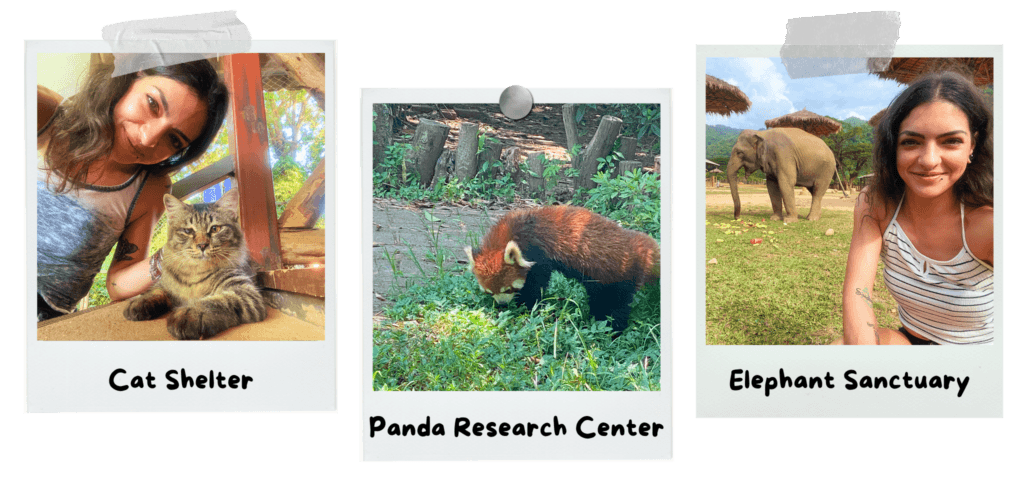
However, if you want a closer encounter with wildlife, there are great alternatives. You can visit ethical sanctuaries, rehabilitation centres, or even take part in volunteering projects. But be careful! Many places call themselves “sanctuaries” when they are actually zoos.
A real sanctuary involves no breeding, buying or selling of animals, and no direct contact. Their main goal is often releasing the animals back into the wild or providing lifelong care if not possible.
Look for reputable animal shelters where you can help with maintenance, food prep, or cleaning without directly handling the wildlife. Remember: your labour should support the facility, not your ego!
💖 Volunteering with Animals.
Platforms such as Workaway and Worldpackers offer a wealth of opportunities that include projects involving animals: from farms and rescue centres to actual zoos. Remember that not everything that’s free is automatically ethical.
My advice is to contact sanctuaries, rehabilitation centres or animal shelters directly. Bear in mind that the costs of taking part in these programmes can be quite high, reaching significant amounts (often from €200 a day up to €2,500 a week).
A simple and reliable way to check a facility’s credibility is to look for GFAS (Global Federation of Animal Sanctuaries) accreditation. This is an independent body that certifies genuine sanctuaries according to extremely strict animal welfare standards:
- No breeding or reproduction.
- No sales or commercial exploitation.
- No direct contact with visitors.
- A clear focus exclusively on rehabilitation.
If a facility cannot provide proof of GFAS accreditation (or an equivalent local certification), I would advise you to treat the label “sanctuary” with great caution.
Finally, even on travel platforms like GetYourGuide, Viator, and Klook you can find ethical experiences as those below (based on project descriptions and reviews!). Whether it is a simple visit or a day of volunteering in a rehabilitation centre, just do your research first before booking.
❓ FAQ.
No. To accept a rider, an elephant must undergo the Phajaan (a brutal process of physical and psychological torture). There is no such thing as an ethical elephant ride.
In most Australian states, holding a koala is actually illegal. Even where permitted, it causes significant stress to the animal, as koalas sleep up to 20 hours a day and need uninterrupted rest.
No. Dolphins are highly intelligent animals that suffer enormously in captivity. Swim-with-dolphins programmes often involve wild-caught animals kept in enclosed lagoons or pools, where they cannot exhibit natural behaviours.
A genuine sanctuary does not breed, buy, or sell animals, does not allow direct contact with wildlife, and does not use animals for performances or entertainment. Its primary goal is rehabilitation and, where possible, release back into the wild. If a facility offers selfies, rides, or animal shows, it is not an ethical sanctuary.
Canned hunting is the practice of shooting captive animals in enclosed areas for sport. Lion cubs used for tourist petting experiences are typically taken from their mothers days after birth. Once they grow too large, they are sold into the canned hunting industry, where trophy hunters pay to shoot them in fenced reserves. Never pay to pet or take photos with lion cubs.
🎈 Conclusion.
I know this was a lot of information to take in. However, I truly believe our choices as travellers matter. Ethical wildlife tourism is not about giving up incredible experiences. Instead, it is about enjoying the world while respecting its beautiful inhabitants.
We hold the power to stop supporting animal cruelty. Every time we refuse to buy a ticket for an unethical show, we cast a vote for a better future. Let’s make sustainable travel the standard. We can protect these fragile ecosystems and let wild animals just be wild.
I hope this guide helps you plan your next adventure with awareness. Please, share this article with your fellow travel buddies so we can spread the word together. Protect the wild, leave no trace, and keep exploring responsibly!
💬 And you? Do you still think a simple pat or a handful of nuts won’t harm the wildlife?
☕ Did you find this post helpful? If you’d like, you can support my blog by treating me to a virtual coffee!

Want to stay updated with my latest itineraries, receive practical guides and unique travel tips, and enjoy exclusive discounts on hotels, flights, and activities?
✨Click the button below and join my community of travel girls!✨
