


Last Updated on September 12, 2026 by Nadia Halfway
📜 Introduction.
Singapore was the last destination of my 3-month backpacking journey across Southeast Asia.
It felt more like a long stopover between my time in Indonesia and my flight back to Italy than a proper trip in its own right. Even though I only spent a few days in Singapore, I tried to make the most of it.
I know there is so much more to see and explore in this small yet powerful country, and as I looked back over this itinerary, I realised just how many other wonders I’d like to visit here. But for now, with this brief but intense 3-day itinerary, I’ll take you with me to some of its most charming landmarks. From Changi Airport to Chinatown, passing by Little India and Armenian St, Singapore is a true mosaic of cultures, gardens, and pastel colours.
⚠️Disclaimer: Some of the websites below are affiliate links or require a promo code for receiving a discount. If you book through them or use my personal promo code at the time of subscription or reservation, I’ll earn a small commission (at no extra cost to you), and you’ll get a discount or a special promotion too. It’s a win–win!
Please be aware that affiliate links may expire and promo codes may reach their usage limit. If you find that a link or code no longer works, kindly let me know. I’ll be happy to share an updated one (if available) directly with you.
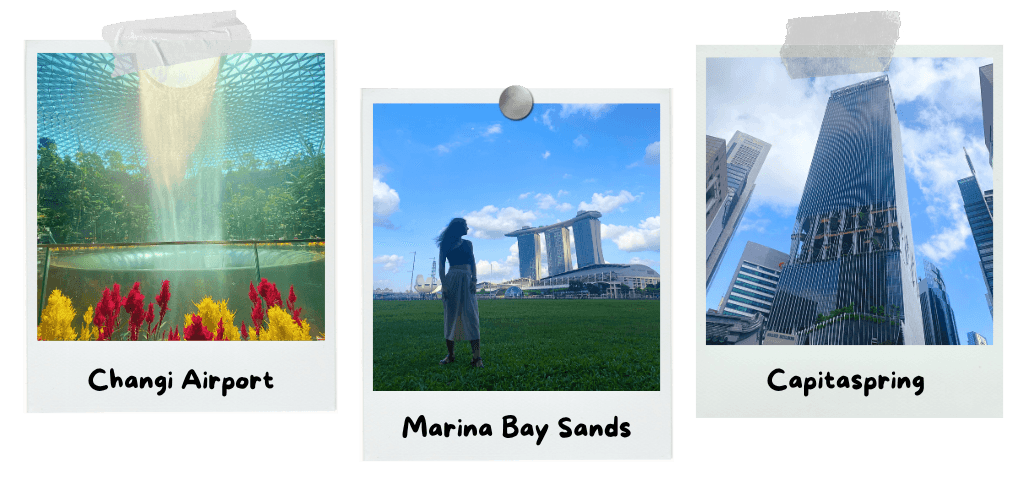
Day 1: Changi Airport and City Centre.
Start your journey exactly at Changi Airport, especially if you’re arriving in Singapore early in the morning and have some time before heading into the city. Changi Airport is well worth exploring; it gives you an immediate taste of Singapore’s obsession with blending architecture and greenery. Otherwise, if you can’t wait to dive straight into the city, I’d recommend walking at least part of Orchard Road, Singapore’s most famous shopping street, which is about 2.2 km long and lined with shopping centres, luxury shops, restaurants and hotels. Nevertheless, I highly advise dedicating some time to Changi Airport on your flight back after you’ve checked in your luggage.
After leaving your luggage at the accommodation, dedicate your first afternoon to Singapore’s modern side by exploring the Central Area. You can follow this route that included the main landmarks: the Esplanade, Merlion Park, Fullerton Square, and the Marina Bay Waterfront Promenade.
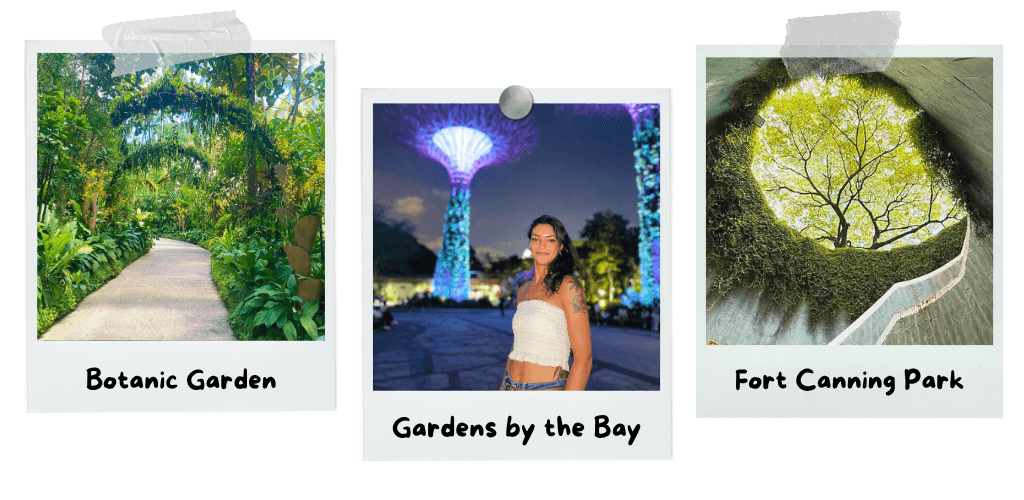
Then head to Gardens by the Bay before sunset so you can experience three completely different sides of it in a single visit: the gardens in daylight, the Supertrees at dusk, and the illuminated installations after dark. The outdoor gardens are open daily from 5am until 2am, while attractions like the Cloud Forest and Flower Dome operate from morning into the evening. The Garden Rhapsody light and sound show runs daily at 7:45pm and 8:45pm, so I’d recommend timing your visit around the earlier show
There are plenty of dining options around Gardens by the Bay. I recommend Satay by the Bay, a food court with a variety of restaurants, where you can try delicious local dishes, such as satay.
Suggested Programme.
- H 11.00 – Changi Airport or Orchard Road
- H 13.30 – Lunch
- H 15.00 – Check in at your accommodation
- H 15.30 – Explore the Central Area
- H 18.00 – Gardens by the Bay
- H 19.45 – Light show at Garden Rhapsody
- H 20.00 – Dinner at Satay by the Bay
Day 2: Singapore’s Cultural Mosaic.
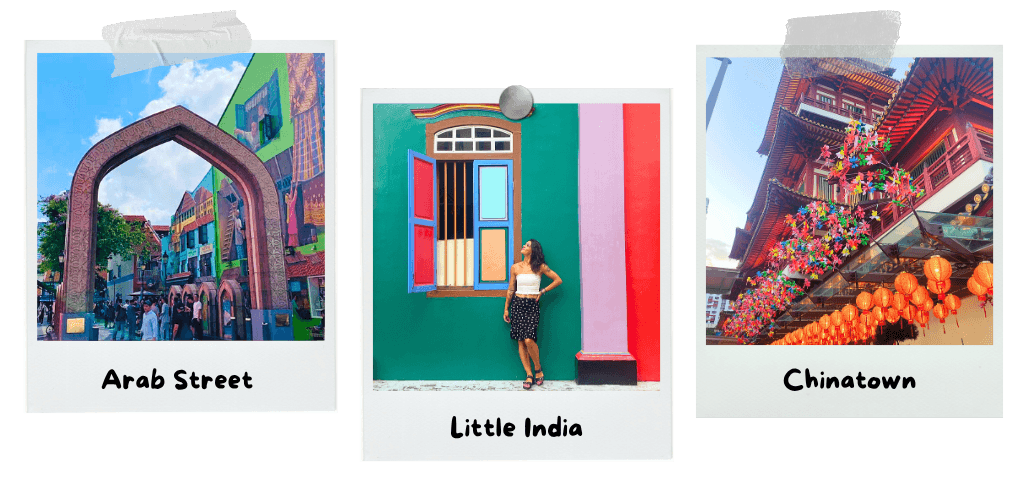
Singapore is a true crossroads of cultures, with several ethnic quarters that are well worth exploring.
Start early in the morning with a visit to Little India, while the streets are lively but not too crowded. Explore Sri Veeramakaliamman Temple, the House of Tan Teng Niah, Serangoon Road, and the colourful streets that define the neighbourhood.
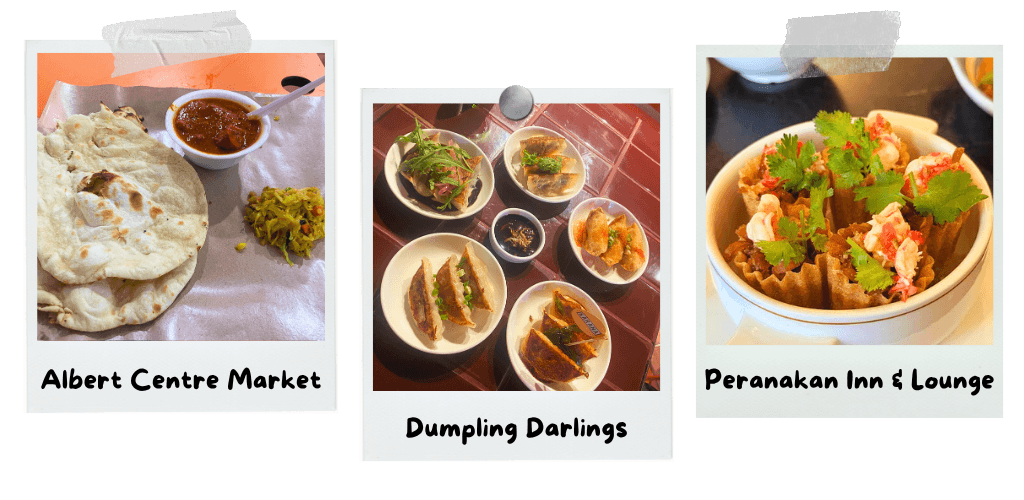
Continue towards Kampong Glam, Singapore’s fascinating Muslim Quarter, where you can explore the Sultan Mosque, Arab Street, and Haji Lane. It’s a fantastic spot for lunch, offering everything from Lebanese, Turkish, and Anatolian dishes to traditional Singaporean food. If you’re craving Indian food, you can easily head back to Little India before continuing the itinerary. However, I suggest eating at the Albert Centre Market & Food Centre, which is packed with food stalls from across Asia and beyond.
After lunch, head south from Kampong Glam passing Armenian Street along the way. Here, you can admire the Peranakan Museum, the Armenian Heritage Gallery, and the Armenian Apostolic Church of St. Gregory the Illuminator.
Keep going and immerse yourself in the Civic District, the historical heart of Singapore, filled with Victorian architecture, theatres, and museums. Take your time wandering around the Padang, St Andrew’s Cathedral, The Arts House at the Old Parliament, the Victoria Theatre, and the National Gallery.
Finally, finish your day in Chinatown. Don’t miss the Chinatown Heritage Centre, Thian Hock Keng Temple, and the Buddha Tooth Relic Temple. Explore the streets while it’s still light, grab dinner at a local Chinese spot, and stick around after sunset. The glowing lanterns, illuminated façades, and vibrant energy of Pagoda Street at night create a completely different atmosphere from the Chinatown you saw earlier in the day.
Suggested Programme.
- H 09.00 – Little India
- H 11.30 – Kampong Glam
- H 13.30 – Lunch at Albert Centre Market & Food Centre
- H 14.30 – Armenian Street
- H 15.00 – Civic District
- H 17.00 – Chinatown
- H 20.00 – Dinner in Chinatown
Day 3: Green Gardens and Pastel-Coloured Houses.
Start your day as early as possible with a visit to the Singapore Botanic Gardens. The main gardens are free to enter and open from 5 AM until midnight. I’d recommend focusing on the National Orchid Garden (UNESCO site), the Rainforest, Swan Lake and the Ginger Garden, rather than trying to see everything.
From the Botanic Gardens, head towards Fort Canning Park. If you have time (and are interested), you can enter the National Museum of Singapore or just walk close to admire its stunning architecture before continuing to the park. Fort Canning is a 22-hectare park rich in history, featuring a spice garden and colonial heritage, and it stays open 24 hours a day. Keep this stop to about an hour, just long enough to admire the spectacular Tree Tunnel before heading off for lunch.
Stroll along the Singapore River between Clarke Quay and Boat Quay to grab lunch. I highly recommend trying the delicious dumplings at Dumpling Darlings on Circular Road.
If you didn’t fit it in on Day 1, consider revisiting Gardens by the Bay during sunlight to explore Floral Fantasy as well. Sadly, I didn’t manage to see it myself, but this indoor garden looks fabulous.
Otherwise, head to the other side of the city to spend the rest of the day exploring the Joo Chiat and Katong neighbourhoods. It takes about 45 minutes to get there from Dumpling Darlings, or half an hour from Gardens by the Bay. In these neighbourhoods you’ll find the famous Peranakan Shophouses, historic 19th-century buildings born of the fusion of Chinese, Malay and European cultures. These beautiful pastel-coloured houses combine commercial spaces on the ground floor with residential accommodation on the upper floors.
Dining in one of the little restaurants in the area whilst savouring the local Nyonya cuisine is the perfect way to round off your three days in Singapore
Suggested Programme.
- H 08.00 – Singapore Botanic Gardens
- H 12.00 – Fort Canning Park
- H 13.00 – Clarke Quay and Boat Quay
- H 13.30 – Lunch at Dumpling Darlings
- H 14.30 – Floral Fantasy and Gardens by the Bay
- H 17.30 – Joo Chiat and Katong
- H 20.00 – Dinner
🛏️ Where to Stay in Singapore.
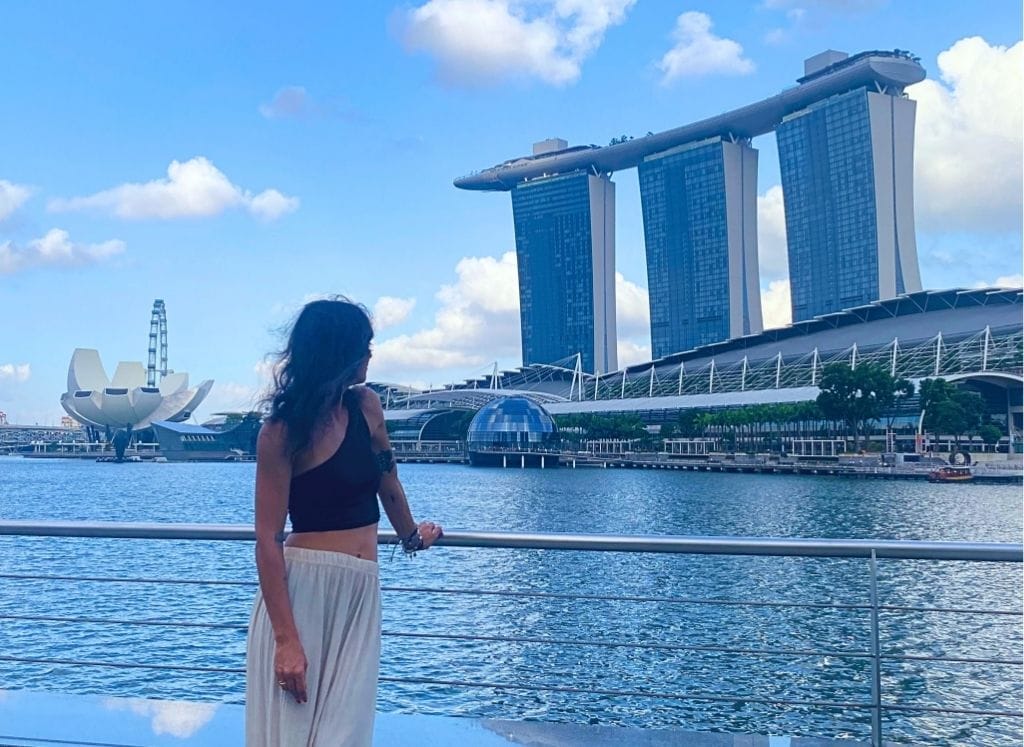
Singapore is well known for being an expensive country, and hotels are no exception. The famous Marina Bay Sands, with its iconic rooftop pool, was way out of my budget, so I admired it from the ground instead.
I chose the 7 Wonders Hostel @ Boat Quay, which has since closed, but the same brand still runs other hostels at reasonable prices, such as 7 Wonders Hostel at Upper Dickson and 7 Wonders Hostel @ Jalan Besar, both located in or close to Little India, with prices starting from €15 a night for a shared room on Trip. Reviews are not super high but (at least at the one I stayed in), everything was good. The 7 Wonders Hostels are a great compromise in a destination as expensive as Singapore.
🎁 Use the referral code below or register via Trip.com to unlock your €10 discount 🎁
U51IZ5
🔽 If you are looking for another type of accommodation, you can explore plenty of options in Singapore using the map below 🔽
🍜 What to Eat in Singapore.
Singaporean cuisine is a delicious reflection of its multicultural identity, blending Chinese, Malay, Indian and Peranakan influences. The best way to discover local flavours is through Singapore’s famous hawker centres (food court), where traditional dishes are served at affordable prices.
Start with Hainanese chicken rice, one of Singapore’s most iconic dishes, featuring rice, chicken, ginger and chilli sauces. Laksa is another must-try, with rice noodles, prawns and other toppings swimming in a rich, spicy coconut broth.
If you love seafood, don’t miss chilli crab, a Singapore classic served in a sweet, spicy and savoury tomato-chilli sauce, usually with mantou to soak it all up. Other traditional Singaporean dishes worth trying include nasi lemak, char kway teow and satay.
For breakfast, try kaya toast, crisp toast spread with coconut and pandan jam, usually paired with soft-boiled eggs and local coffee or tea. Finally, Kopi is Singapore’s traditional coffee. It’s made with Robusta beans roasted with sugar and margarine, filtered through a cloth bag and served hot with condensed milk.
Being such a mosaic of cultures, with designated ethnic areas that swarm with restaurants and food stalls, the best way to enjoy Singapore’s food scene is via food tours. There are plenty to choose from: food tours of the hawker centres, of Little India, and even for strong palates. Take a look at these I found on GetYourGuide.
Suggested Restaurants.
If food tours are out of your budget or mess too much with the itinerary, here I have listed some of the restaurants I have eaten at and some gems I found while writing this article. Some have already been mentioned above, and the rest can be perfectly inserted into the travel plan.
- Old Airport Road Food Centre. One of the best hawker centres for sampling several local dishes in one stop.
- Lau Pa Sat. It is Singapore’s most famous hawker centre. It’s located within a splendid historic Victorian-style building right in the heart of the Civic District.
- Satay by the Bay. Another hawker centre right by Gardens by the Bay, perfect for satay with a skyline view.
- Albert Centre Market & Food Centre. A local favourite near Little India, great for Malay and Peranakan bites.
- Maxwell Food Centre. A classic stop for hawker food, particularly chicken rice, and a convenient choice near Chinatown.
- Alani. A cosy spot for modern, veg-friendly takes on Southeast Asian flavours.
- Dumpling Darlings. Handmade dumplings in a laid-back setting, ideal for a casual dinner.
- Song Fa Bak Kut Teh. A great choice for trying bak kut teh, a peppery pork rib soup. There are multiple locations across the city.
- The Coconut Club. Ideal for nasi lemak and other coconut-rich Singaporean flavours.
- Peranakan Inn & Lounge. An excellent choice for authentic Peranakan dishes in a heritage-style setting.
- Guan Hoe Soon Restaurant. One of Singapore’s oldest Peranakan restaurants, perfect for a deep dive into Nyonya cuisine.
🎫 Where to Buy Tickets.
As I had limited time with a very packed itinerary (and was also on a budget), I purchased my tickets in advance for the Botanic Gardens and Gardens by the Bay, both on Tiqets. I also bought the museum pass, as it worked out cheaper even though I only visited 2 of the 4 museums included. Booking ahead saved me both time and money, and meant I didn’t have to queue at any of the attractions.
However, if you have more time and want to embark on more adventurous activities and experiences, Singapore is the perfect destination for it. You can take a cruise along the river, reach Sentosa Island by cable car or boat, visit Universal Studios, or simply spend a day hopping between the island’s other attractions. There’s really no shortage of ways to fill extra days here.
🎲 Travel Hacks: Singapore Pass.
If you’re planning a longer stay in Singapore, or want to pack in more adventures like the Skyline Luge at Sentosa, a bay cruise, an observation deck, extra museums or a fancy food experience, I highly suggest picking up the Singapore Pass. For instance, the All-Inclusive Pass by GoCity covers up to 7 days and includes pretty much everything. It’s not cheap, the 3-day all-inclusive pass costs €290, but if you plan to pack your days with attractions, you’ll still end up saving a good amount of money compared to paying for everything separately.
All-Inclusive Pass also includes dining experiences, from a set lunch at Raffles Courtyard to a Korean fried chicken and beer experience or a signature Lebanese lunch, among many others.
The Singapore Pass is also available on GetYourGuide, and you can check its availability directly from the widget below.
💡 Travel Tips.
Visa and Entry Requirements.
Most European citizens don’t need a visa to enter Singapore for stays of up to 90 days. Make sure your passport is valid for at least six months beyond your arrival date, and that you can show proof of onward travel. Consult your embassy and official site for further information and updated requirements.
In any case, before you fly, you’ll also need to complete Singapore’s Digital Arrival Card online, within three days of your arrival. It only takes a few minutes and it’s free.
Currency.
Singapore’s currency is the Singapore Dollar (SGD). Cards are accepted almost everywhere, from hawker centres to public transport, so you really don’t need to carry much cash. I’d still keep a small amount on hand for smaller stalls or markets. If you’re coming from Europe, I always suggest bringing a travel card like Revolut or Wise to avoid getting hit by conversion fees.
1 SGD corresponds to 0,68 EUR.
Getting around.
Singapore has one of the best public transport systems in the world. The MRT (metro) is fast, spotless and connects almost everywhere you’ll want to go. Purchase a tourist EZ-Link card or simply tap in and out with a contactless card, and you’re set for the whole trip.
Taxis and Grab (Singapore’s version of Uber) are affordable too, and honestly the city is so walkable that you’ll cover a lot of ground on foot, especially in neighbourhoods like Chinatown or Kampong Glam.
Healthcare and Travel Insurance.
Healthcare in Singapore is among the best and most efficient in the world. Nevertheless, it’s very expensive, especially for tourists and non-residents. It’s very important to purchase good travel insurance, such as Ekta that covers mopeds, water parks, attractions, bicycle rides, and other adventurous activities you might do in Singapore.
And if you have a chronic illness, look for comprehensive travel insurance that covers pre-existing conditions. In this regard, take a look at my updated article 5 Insurance Policies for Travelling with Type 1 Diabetes.
Rules to know (and take seriously).
Singapore’s reputation for being strict isn’t a myth, and as a traveller, the rules apply to you too.
Chewing gum is banned: you can’t buy it, bring it into the country, or chew it in public, and fines start from a few hundred dollars. Littering is treated just as seriously, cigarette butts included, with fines starting around SGD 300 and repeat offences leading to a court appearance. Jaywalking is technically illegal too, so always use the zebra cross.
Smoking is only allowed in designated areas but vaping is banned outright, and drug offences are punished extremely severely, including the death penalty for trafficking. You must declare all cigarettes and tobacco products when you arrive in Singapore. There is no duty-free allowance for tobacco, meaning you must pay duty and Goods and Services Tax (GST) on every stick, even for personal use.
eSIM.
Purchasing an eSIM is the most convenient way to stay connected and avoid high roaming charges in Singapore. You can choose and purchase your data plan online before you set off (through providers such as Airalo, Saily, Quibity and Yesim) and set it up in just a few minutes by scanning a simple QR code. This way, as soon as you land at the airport, your phone will automatically connect to the main networks, giving you instant internet access so you can explore the city without a care in the world.
🎁 Use the referral code below to register on Yesim and unlock your €5 discount 🎁
UKUO6728
❓ FAQ.
Three days are the minimum for a solid overview of the city’s main highlights, though a week gives you time to explore further and slow down.
It depends. Most European citizens don’t need a visa for stays of up to 90 days. Check the requirements with your Embassy. Besides, you need to complete the Digital Arrival Card online before arrival.
The MRT is fast, clean and covers most of the city, making it the easiest way to get around. Walking is also a great option in central neighbourhoods.
It can be, especially accommodation, but hawker centres make eating well surprisingly affordable, and public transport is cheap too.
Smoking is not completely illegal in Singapore, but it is heavily restricted. You can smoke only in clearly marked, designated smoking areas. Smoking in prohibited public spaces can lead to fines up to $1,000 SGD, and electronic cigarettes (vapes) are totally banned. Remember to declare every single cigarette and tobacco product on arrival.
🎈 Conclusion.
Three days is never quite enough for a city as layered as Singapore, but it’s enough to fall for it. Between the skyline at Marina Bay, the vivacity of Little India, and the pastel shophouses of Katong, this small country manages to pack in an extraordinary amount of contrast in a very short space.
Whether you’re using it as a stopover, like I did, or making it the main event of your trip, I hope this itinerary gives you a solid starting point to build your own version of Singapore.
And if you do have extra time up your sleeve, don’t hesitate to slow down even more. This is a destination which, although small, modern and efficient, is well worth exploring at a leisurely pace, in every nook and cranny.
💬 And you? Have you ever been to Singapore yet? If so, which ethnic neighbourhood fascinated you the most? Tell me everything in a comment!
☕ Did you find this post helpful? If you’d like, you can support my blog by treating me to a virtual coffee!

Are you dreaming of your next trip but not sure where to start?
Book a 1:1 travel consultation or request a personalised itinerary and I will design the trip of your dreams!
✨Click the button below for my Travel Services✨
