



Last Updated on July 30, 2026 by Nadia Halfway
📜 Introduction.
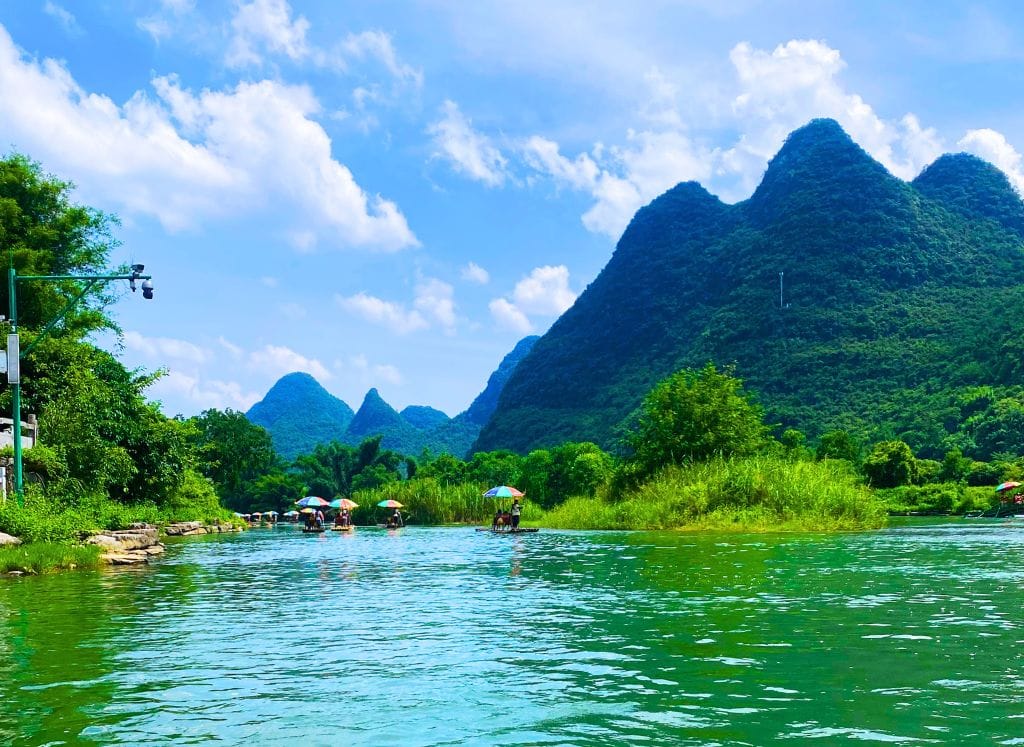
Guilin, with its rice fields, bamboo and manga scenery, is one of the most scenic cities in China.
Its nature looks as if it were taken straight from an animated film: karst mountains, terraced rice fields, and green rivers with perfect curves. In just 3 days in Guilin, you can experience a unique blend of culture, nature, and breathtaking views. The countryside of Guilin is an oasis for anyone looking to unwind and escape the chaos of China’s big cities.
With this 3-day itinerary in Guilin, I bring you to discover the landscapes that inspired Dragon Ball’s Mount Paozu, surrounded by rice fields, bamboo and manga scenery.
⚠️Disclaimer: Some of the websites below are affiliate links or require a promo code for receving a discount. If you book through them or use my personal promo code at the time of subscription or reservation, I’ll earn a small commission (at no extra cost to you), and you’ll get a discount or a special promotion too. It’s a win–win!
Please be aware that affiliate links may expire and promo codes may reach their usage limit. If you find that a link or code no longer works, kindly let me know. I’ll be happy to share an updated one (if available) directly with you.
Day 1: Guilin City Centre.
Half the day slipped away on the train. I left Zhangjiajie at 7 AM, made a connection along the way, and reached Guilin in the early afternoon, around 4.30 PM.
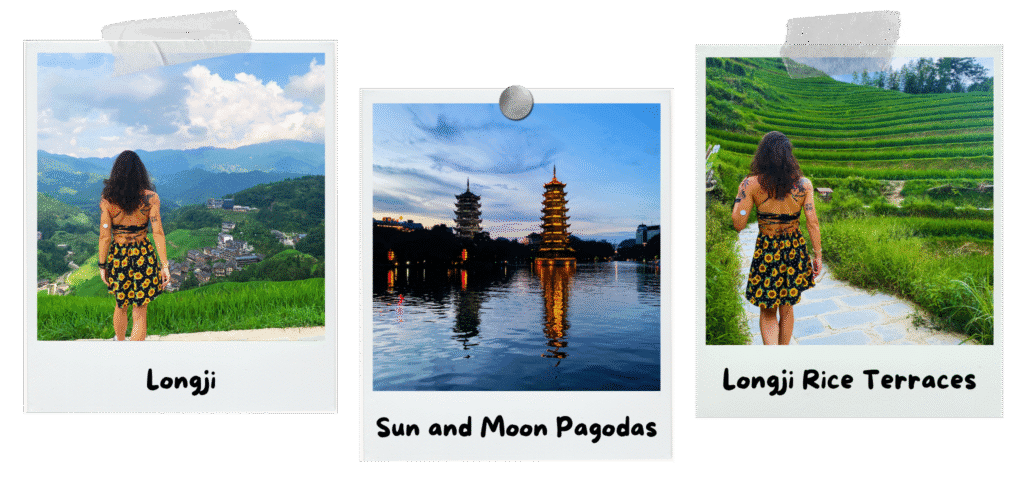
After checking in, I dropped off my bags at the hotel and headed straight to the city center to explore the Sun and Moon Pagodas. These twin towers, glowing beautifully at sunset, offer one of the most scenic views in Guilin city. A walk around Shahu Lake is the perfect way to ease into the city’s calm atmosphere.
I ended my evening wandering through the streets and alleys nearby, enjoying street food, live music, and a relaxed vibe.
Day 2: Searching for Mount Paozu.
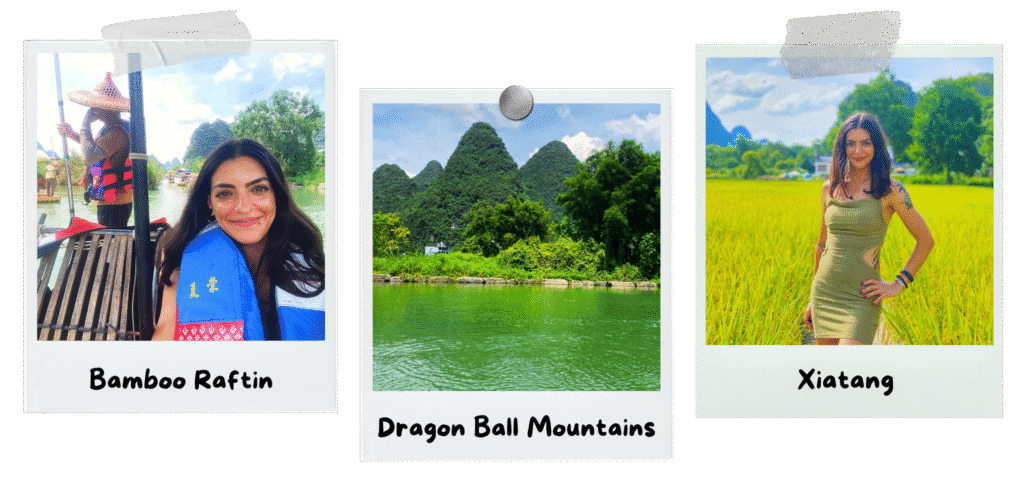
On my second day, I explored the area along the Lijiang River.
I had originally planned to visit another spot, but my taxi driver suggested changing course and heading to Xiatang to also try bamboo rafting.
It turned out to be the perfect choice. Xiatang is a lesser-known destination, much quieter and also closer to the city. After the rafting experience, I walked along the river, stopped at a small café, and continued my stroll through green fields and rolling hills.
These are also the landscapes that inspired Akira Toriyama when creating Mount Paozu, the iconic setting of Dragon Ball.
Day 3: Longji Rice Terraces.
I spent the third and final day exploring the Longji Rice Terraces, one of the most iconic landscapes in China.
It’s a full-day excursion, as it takes several hours to reach them from Guilin. Shuttle buses depart from Guilin North Coach Terminal early in the morning. Book your seat in advance during peak season.
The terraces stretch across the hillsides of Longsheng County, carved by the Zhuang and Yao ethnic minorities over seven centuries. The scale is staggering. The terraces climb from 300 to 1,100 metres above sea level, layering the mountains in perfect, curved band
The area offers numerous scenic viewpoints, including Ping’an, Dazhai and Jinkeng (also known as Seven Stars with the Moon). Ping’an is the easiest to reach and the most popular. Dazhai and Jinkeng offer more dramatic panoramas but require longer walks.
🛏️ Where to Stay in Guilin.
I stayed for three nights at the Immersing Hotel, spending €115 by booking via Trip. The hotel is very charming, and the breakfast is excellent. Probably the best of all the hotels I’ve stayed in. Dinner is also included here by paying an additional fee.
The only downside is that the pool isn’t as large or as beautiful as it looks in the photos. Additionally, it’s only accessible from 2 PM onwards, so it’s not available in the morning.
🎁 Use the referral code below or register via Trip.com to unlock your €10 discount 🎁
U51IZ5
🔽 If you are looking for another type of accommodation, you can explore plenty of options in Guilin using the map below 🔽
🍜 What to Eat in Guilin.
The local specialty is Guilin rice noodles. A must-try are those at Happy Rice Noodles (Xiangshan Branch) in the city center. They come topped with crispy pork, braised beef, roasted peanuts, and fermented radishes in a rich bone broth, making them the ultimate comfort food.
If you want to eat like a local, you must try Guilin Oil Tea called “Chinese coffee”. They fry tea leaves with garlic and ginger, and then pound them into a warm broth served with crispy rice and peanuts. It tastes slightly bitter at first, but the sweet aftertaste is highly addictive!
Finally, treat yourself to some hot, crispy sesame candied Lipu taro for dessert.
If you travel to Yangshuo, you should try the famous Beer Fish. The chefs take fresh fish straight from the Li River, sear it in tea-seed oil, and then braise it in local Liquan beer right at your table.
🎫 Where to Buy Tickets.
I bought all the tickets directly on site. Below, I’ve listed the costs:
- Longji Rice Terraces = €10
- Bamboo Rafting Experience = €25
If you decide to stay longer in Guilin, there are plenty of other activities to enjoy: a Li River cruise, a visit to the Elephant Trunk Hill, or exploring the area’s fascinating caves. On GetYourGuide, you can find many tours and activities in Guilin and the surrounding region.
🐉 Guilin and Dragon Ball: The Real Connection.
Akira Toriyama, the creator of Dragon Ball, drew direct inspiration from the karst landscapes around Guilin when designing Mount Paozu (the mountain where Goku grows up). The distinctive silhouette of isolated limestone peaks rising abruptly from flat land is unmistakable. Once you see it in person, the connection is impossible to miss.
Toriyama visited China and fell in love with this scenery. The rolling hills, the haze drifting over the rivers, the jagged rock formation: all of it made its way into his drawings. Standing here along the Li River feels like stepping into a panel from the original manga.
💡 Travel Tips.
🚌 Getting Around Guilin.
Even though Guilin is a fairly well-known and tourist-friendly city, it does not have a subway system. The territory, often intersected by the river and its branches, make getting around its streets slow and sometimes tricky.
Taxis are available but can get stuck in traffic, especially near the city centre. Didi (China’s Uber equivalent) works well here and is the most reliable option. Download the app before you arrive and set it up with WeChat Pay.
Reaching the Longji Rice Terraces or the river area for bamboo rafting takes several hours using both with public transportation and Didi. For this reason, I highly recommend leaving very early in the morning. The only practical option is the shuttle bus from Guilin North Coach Terminal. The journey takes roughly 3 hours each way. Buses leave from early morning; the last return bus departs around 5 PM. Plan your day carefully to explore these stunning rice terraces at a relaxed pace.
For bamboo rafting at Xiatang, a taxi or Didi is the easiest solution. Xiatang is close to the city, about 30-40 minutes by road. In case, your hotel can usually arrange a driver too.
Finally, the city centre, like the lake area, pagodas, and market streets, is perfectly manageable on foot.
📅 Best Time to Visit Guilin.
The best seasons are spring and autumn, for very different reasons.
In spring (April-May), the Longji rice terraces are bright green and freshly flooded. Rainfall increases towards May, but the lush scenery makes it worthwhile.
Autumn (September-October) is the most spectacular time. The rice harvest turns the terraces to shades of gold and amber, basically the version you see in every iconic photograph. Temperatures are mild and skies are generally clear.
Summer (June-August) is hot and humid, with frequent heavy rain. The scenery is beautiful but touring in the heat and under the rain can be exhausting.
Winter (November-February) is cold but quieter. Longji occasionally sees snow, which creates an ethereal, mist-covered landscape. If you are comfortable with cold and want fewer crowds, this is an underrated time to visit.
One golden rule: avoid Chinese national holidays. The Golden Week in early October and the May Day holiday in early May bring enormous crowds to every major attraction, including Longji and the bamboo rafting area.
🤔 Guilin or Yangshuo: Which One Should You Choose?
Honestly, I haven’t visited Yangshuo, so I cannot give you a direct comparison. However, I can definitely share what I discovered while planning my trip!
Guilin is a modern city and the main gateway to the region. It features incredible urban karst sights right in town, like the famous Elephant Trunk Hill.
On the other hand, Yangshuo is a scenic rural town. Limestone karsts surround the area, offering breathtaking countryside scenery, plenty of outdoor activities, and a laid-back vibe. From my research, most travellers actually prefer staying in Yangshuo to soak up the natural beauty.
So, why did I choose Guilin? It comes down to transport. Guilin is much better connected to the rest of China by flights and trains than Yangshuo.
To reach Yangshuo, you usually have to travel to Guilin first and then catch a bus. If you want to take the train, keep in mind that Yangshuo does not have its own railway station. You need to get off at Xingping Station, and then take a bus or a taxi to reach the town.
Speaking of Xingping, it is becoming popular for its traditional, rural village feel. If you love photography, it is the perfect destination to shoot the sunrise.
Because I had limited time during my 1-month travel across China, I decided to visit only in Guilin for its better transport connections! It is also the main hub to reach the Longji Rice Terraces and do the bamboo rafting experience in Xiatang.
| Guilin | Yangshuo | |
|---|---|---|
| Type | Modern city | Rural town |
| Transport connections | Excellent (trains and flights) | Limited (no railway station) |
| Karst scenery | In the city | Surrounding countryside |
| Best for | Longji, Xiatang, transit hub | Li River, cycling, outdoor activities |
| Crowd level | Moderate | Higher in peak season |
| Vibe | Urban | Relaxed |
| Recommended for | Short trips, transit | Nature lovers, photographers |
❓ FAQ.
Absolutely. Guilin offers a combination of urban karst scenery, authentic Chinese culture and access to some of the most dramatic landscapes in the country. The bamboo rafting and the Longji Rice Terraces alone are worth the journey.
Three days cover the essentials: one for the city centre and bamboo rafting, one for Longji and one as a buffer for travel. Add a fourth day if you want to explore further or visit Yangshuo.
It depends on your priorities. Guilin has better transport connections, ideal if you are continuing across China. Yangshuo offers more scenic countryside and a slower pace.
Take the shuttle bus from Guilin North Coach Terminal. Journey time is approximately 3 hours. The last return bus leaves around 5 PM so plan your day accordingly.
Jinkeng (Seven Stars with the Moon) offers the most dramatic panorama. For an easier visit, Ping’an is the most accessible. Dazhai sits between the two in terms of difficulty and reward.
I organised mine directly with a taxi driver to Xiatang and purchase the ticket there. You can also book via GetYourGuide or Klook for a fully arranged experience: easier if you prefer not to take a bus or a taxi.
🎈 Conclusion.
Guilin is a destination that surprises at every turn, with breathtaking rice fields, bamboo, and manga scenery.
In just three days, you can experience the best of the region, from nature and culture to adventure and fun. It’s the kind of trip that stays in your heart, showing just how diverse and surprisingly relaxing China can be.
My journey through China then continued in Nanchang, the star of the Jiangxi province.
💬 And you? Have you ever visited a place that left you completely speechless, like Guilin?
☕ Did you find this post helpful? If you’d like, you can support my blog by treating me to a virtual coffee!

Are you dreaming of your next trip but not sure where to start?
Book a 1:1 travel consultation or request a personalised itinerary and I will design the trip of your dreams!
✨Click the button below for my Travel Services✨
