



Last Updated on August 12, 2026 by Nadia Halfway
📜 Introduction.
If you’re planning a trip to Baku, you shouldn’t miss the National Carpet Museum, the cultural treasure of Azerbaijan.
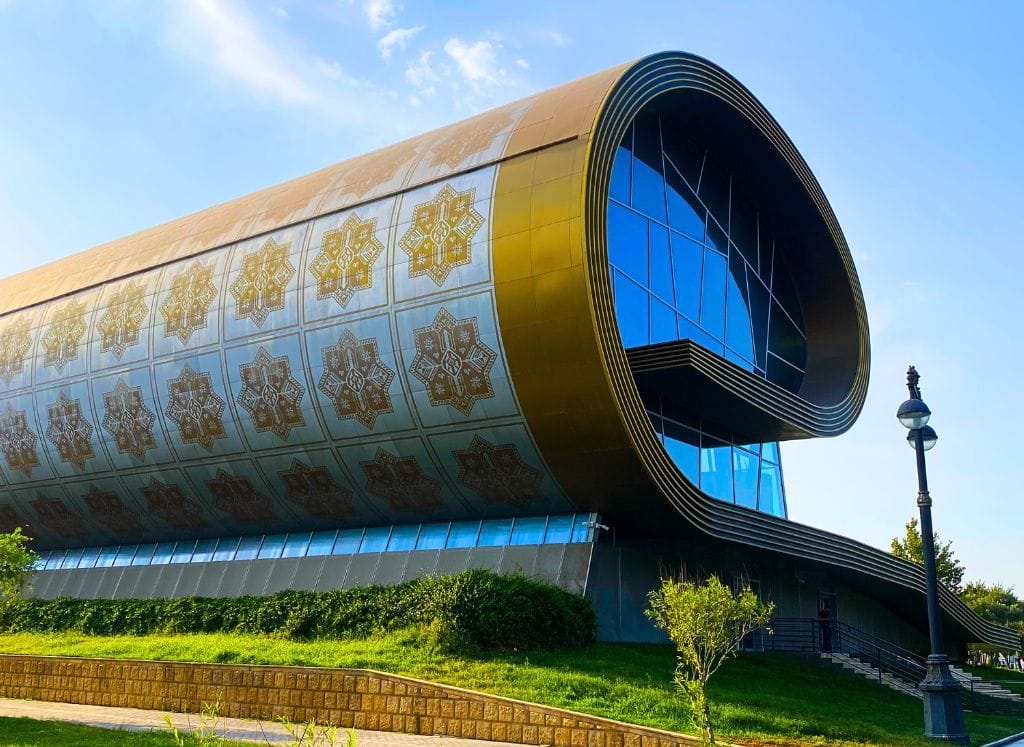
Nestled along the picturesque Baku Promenade and next to Mini Venice, this iconic museum offers a fascinating glimpse into the rich heritage of Azerbaijani carpet weaving: a craft that has been celebrated for centuries.
It is an unmissable stop on any itinerary in the capital of Azerbaijan, particularly if you have a soft spot for futuristic architecture and local craftsmanship.
⚠️Disclaimer: Some of the websites below are affiliate links or require a promo code for receiving a discount. If you book through them or use my personal promo code at the time of subscription or reservation, I’ll earn a small commission (at no extra cost to you), and you’ll get a discount or a special promotion too. It’s a win–win!
Please be aware that affiliate links may expire and promo codes may reach their usage limit. If you find that a link or code no longer works, kindly let me know. I’ll be happy to share an updated one (if available) directly with you.
💎 A Unique Architectural Landmark.
The National Carpet Museum, often called the Baku Carpet Museum, is not only famous for its collections but also for its stunning architecture. Designed to resemble a rolled carpet, the building itself is a tribute to the art form it houses. Located in the heart of Baku, the museum is easily accessible and perfect for combining with a stroll along the beautiful Baku Promenade. Visitors are instantly captivated by this creative design, making it a favorite spot for photography enthusiasts and cultural explorers alike.
🏛️ History of the Museum.
The Azerbaijan National Carpet Museum has its roots in 1967, when a dedicated carpet collection was first established in Baku under the Soviet cultural heritage programme. For decades it operated in a temporary location, until the decision was made to give this extraordinary collection the home it truly deserved.
The current building opened its doors in 2014 along the Baku Promenade, instantly becoming one of the most recognisable landmarks of modern Baku.
🖼️ Explore the Rich Collection of Azerbaijani Carpets.
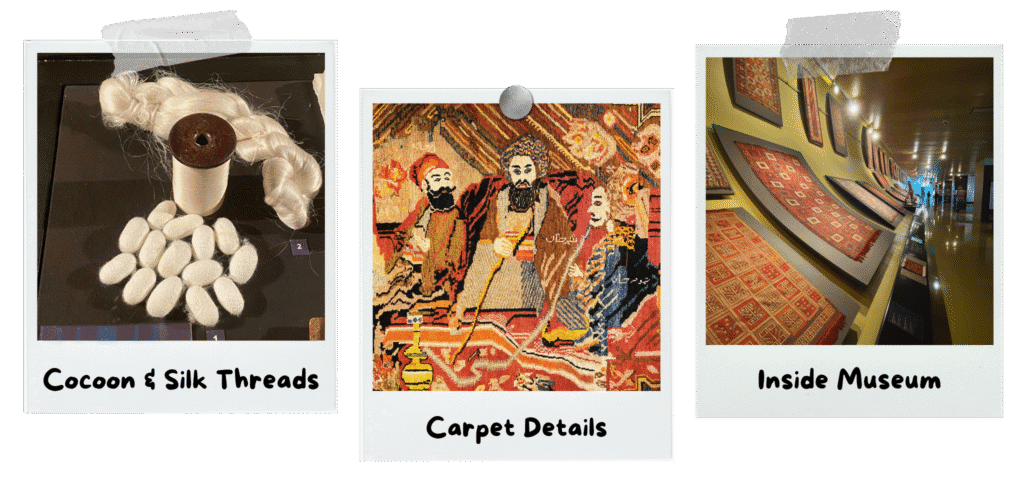
The museum houses over 10,000 pieces, including carpets, kilims, embroideries, and textile accessories spanning several centuries. The collection is organised by regional weaving schools, each with its own distinct character. Karabakh carpets are known for their bold floral motifs and deep reds. Guba pieces feature intricate geometric patterns on dark backgrounds. Shirvan rugs are finer and more delicate, with smaller repeating designs. Ganja and Baku schools reflect stronger Persian and Ottoman influences.
One of the most interesting distinctions you will notice as you explore is the difference between a kilim and a traditional Azerbaijani pile carpet. A kilim is a flat-woven textile with no knots, making it thinner, lighter, and typically used as a floor covering or wall hanging. An Azerbaijani pile carpet, by contrast, is built knot by knot: each thread is individually tied around the warp, then cut to create the characteristic dense, velvety surface. This technique is far more time-consuming, which is why authentic pile carpets are significantly more valuable .
In 2010, the art of Azerbaijani carpet weaving was inscribed on UNESCO’s List of Intangible Cultural Heritage.
Some highlights include:
- Historical carpets from the 17th and 18th centuries.
- Contemporary works by modern Azerbaijani artists.
- Rare ethnic carpets, representing various regions like Karabakh, Guba, and Shirvan.
Whether you’re an art lover or simply curious about cultural heritage, the museum offers a fascinating narrative through the textures, patterns, and vibrant colours of Azerbaijani carpets.
👩🏻🏫 Interactive Exhibits and Educational Opportunities.
Beyond its impressive displays, the National Carpet Museum also provides interactive exhibits and educational programmes. Visitors can learn about traditional weaving techniques, the symbolism behind different motifs, and the cultural significance of carpets in Azerbaijani life. Workshops and guided tours offer a hands-on experience, making it ideal for families and cultural tourists.
💡 Travel Tips.
There isn’t much specific advice to give about visiting the National Carpet Museum. Just keep in mind:
- Photography: allowed in most areas, but flash may be restricted.
- Opening hours: typically from 10 AM to 6 PM (but check ahead for seasonal changes).
- Admission: very affordable, only 10 AZN (approx. €5) for foreign visitors, with discounts for students and groups.
You can also request different services such as Photographing in national costume (for 15 AZN) and Master class on carpet weaving (50 AZN per 8 lessons). Source: iticket.az
On GetYourGuide, you can book a fantastic guided tour of the Azerbaijan National Carpet Museum, alongside plenty of other city activities. I highly recommend taking a beautiful evening boat tour to admire Baku’s stunning illuminated skyline!
🎈 Conclusion.
The National Carpet Museum in Baku is more than just a collection of rugs: it’s a cultural journey through Azerbaijan’s rich history and artistry.
From its iconic architecture to its exquisite carpets, every corner of the museum tells a story. Whether you’re a history buff, art enthusiast, or a traveller seeking authentic experiences, this museum is a total immersion into the cultural treasure of Azerbaijan.
If you’re planning a trip to the Caucasus, do take a look at my 8-day itinerary in Georgia, another fascinating country steeped in history and tradition.
💬 And you? Would you visit this extraordinary museum? Let me know in the comments if you have already visited Baku.
☕ Did you find this post helpful? If you’d like, you can support my blog by treating me to a virtual coffee!

Are you dreaming of your next trip but not sure where to start?
Book a 1:1 travel consultation or request a personalised itinerary and I will design the trip of your dreams!
✨Click the button below for my Travel Services✨
