



Last Updated on August 22, 2026 by Nadia Halfway
📜 Introduction.
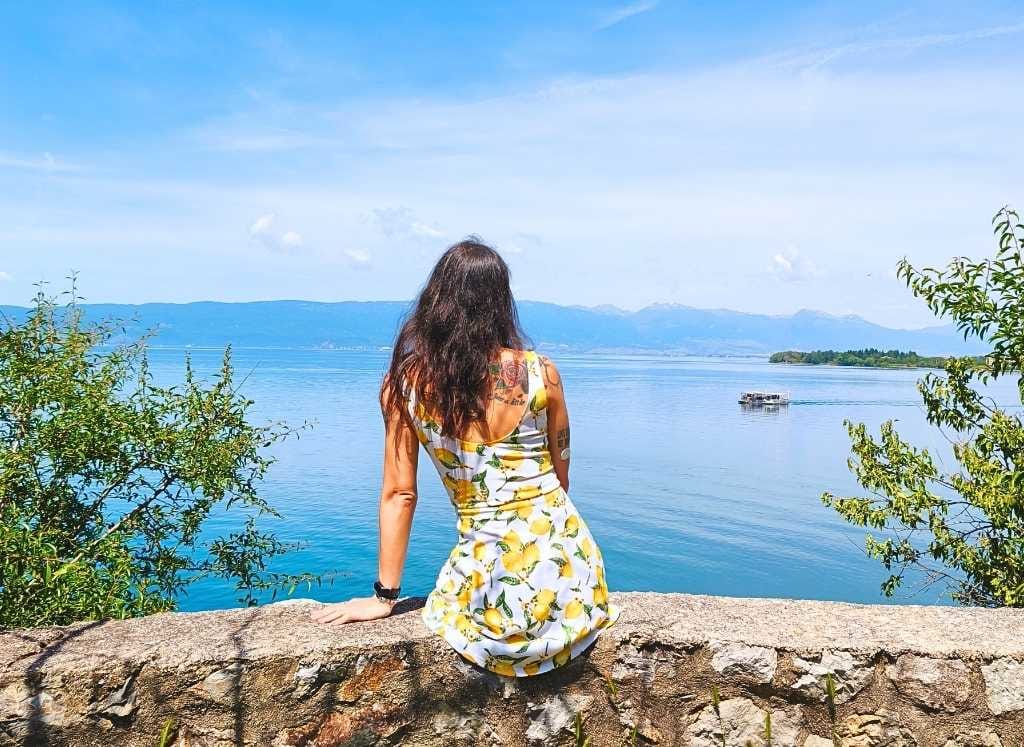
Are you planning a trip to North Macedonia? If yes, you absolutely must add Ohrid to your itinerary. It is a stunning UNESCO World Heritage Site where crystal-clear waters meet centuries of layered history: Hellenistic, Roman, Byzantine, and Ottoman, all compressed into one small, breathtaking town on the edge of a glittering lake.
Ohrid’s old town climbs steeply up a hillside crowned by an ancient fortress, while the lake stretches out below like a mirror reflecting the mountains on the Albanian shore. But Ohrid is actually known for having one of the oldest and deepest lakes in the world, estimated to be around 3 to 5 million years old and home to several endemic species found nowhere else on earth. It may not be the sea, but its sheer scale and magical blue-green colour will genuinely make you question what you’re looking at.
I have been here twice and after my recent trip, I have put together this ultimate list of the 25 best things to see and do in Ohrid.
⚠️Disclaimer: Some of the websites below are affiliate links or require a promo code for receiving a discount. If you book through them or use my personal promo code at the time of subscription or reservation, I’ll earn a small commission (at no extra cost to you), and you’ll get a discount or a special promotion too. It’s a win–win!
Please be aware that affiliate links may expire and promo codes may reach their usage limit. If you find that a link or code no longer works, kindly let me know. I’ll be happy to share an updated one (if available) directly with you.
🏘️ Charming Towns and City Vibes.
1. Explore Varosh, the Historic Centre.
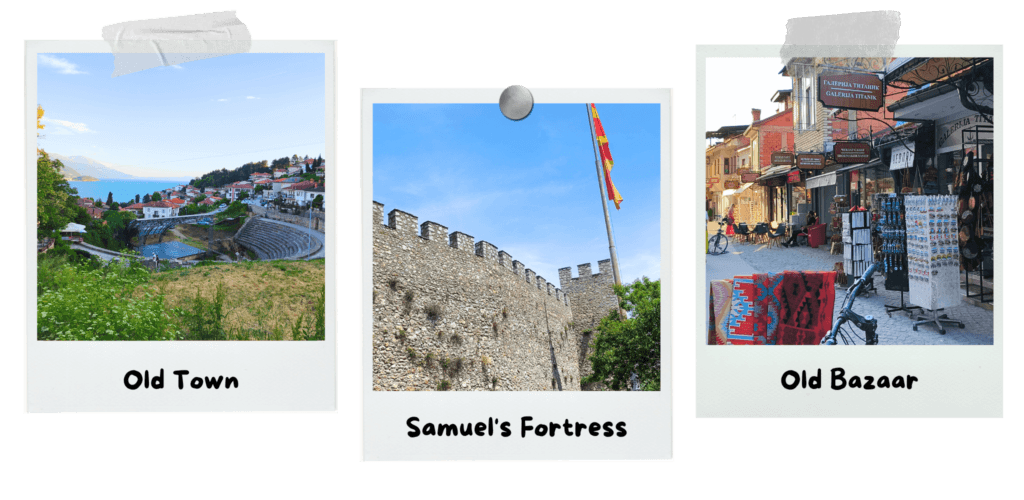
Start your trip right in the Old Town walking on its cobbled streets. Pass by the traditional Ottoman houses from the 17th century with their whitewashed facades and wooden balconies jutting out over the narrow alleys. Wear comfortable shoes as the streets climb steeply up the hillside, and some of the paths are quite uneven underfoot. But the panoramic views of the lake from the upper reaches of the old town make every steep step more than worth it.
2. Climb Samuel’s Fortress.
While exploring the Old Town, keep heading up as you will reach Samuel’s Fortress. This massive ancient citadel dominates the skyline. Walk along the ancient walls to get the 360-degree views of the entire city and the sparkling lake.
3. Stroll around the Old Bazaar.
It is the perfect spot to soak up the local atmosphere and watch daily life unfold. Stroll past vibrant market stalls, tiny boutique shops, and the charming Mosque of Ali Pasha and Mosque of Zeynel Abedin Pasha. The whole street is full of energy, especially in the mornings when locals are out shopping alongside early-rising tourists.
4. Take a Day Trip to Struga.
Just a 20-minute drive west of Ohrid sits the charming town of Struga. Here, the Black Drin river flows through the centre before draining Lake Ohrid. Walk along the pretty riverbanks, grab a coffee at one of the riverside cafés, and relax. Struga is also famous for its long sandy beaches (in contrast to Ohrid’s pebbly shores) and for the Struga Poetry Evenings, one of the oldest and most respected poetry festivals in the world, held every August.
5. Buy Authentic Ohrid Pearls.
One of Ohrid’s most fascinating claims to fame is its unique pearl-making tradition. Only two families hold the secret for producing these pearls from fish scales, that populate Lake Ohrid. The result is a lustrous, iridescent pearl unlike anything produced elsewhere in the world. When shopping, always look for a certificate of authenticity and buy from a reputable shop in the Old Bazaar to ensure you’re getting the real thing.
💧 Relax by the Lake.
6. Take a Boat Tour.
One of the most rewarding ways to experience Ohrid is from the water itself. Panoramic boat tours depart regularly from the central port and cruise past the Church of St. John at Kaneo, the cliffs of the old town, the secluded Labino beach, and even the so-called Caves of Love, two romantic sea caves popular with locals. Longer excursions run all the way down the coast to St. Naum Monastery, often with a stop at the Bay of Bones. I recommend a sunset cruise: the view is incredible and includes a glass of prosecco (or juice) to enjoy on board.
7. Relax at Potpesh Beach.
After your walk to Kaneo, reward yourself with some well-earned downtime. Just below the cliff path, tucked into a rocky cove, lies Potpesh Beach. This is a small, sheltered pebble bay that catches the afternoon sun perfectly. You can hire a sun lounger and an umbrella, order a drink from the bar, and swim in the water. There are other beaches around but this is one of the closest to the centre, with crystal-clear water, sunbeds and a bar.
🥾 Nature and Outdoor Adventures.
8. Trek to the Church of St. John at Kaneo.
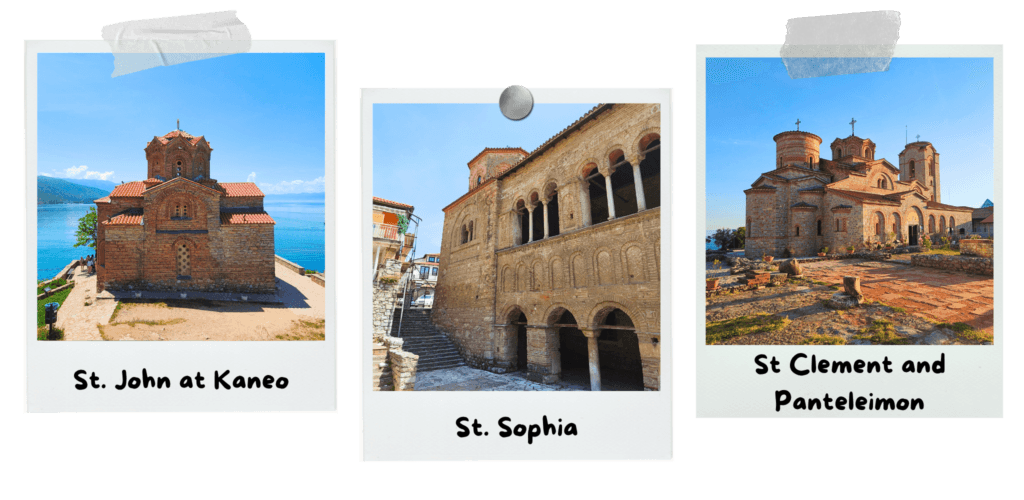
This is probably the most iconic image in all of North Macedonia. The coastal path to the Church of St. John at Kaneo winds along wooden boardwalks fixed into the rocky cliff edge above the lake. The church dates from the 13th century and sits on the site of an even earlier building. I would strongly recommend going early in the morning when the light at sunrise is extraordinary
9. Go Scuba Diving.
Lake Ohrid is not just beautiful from above because what lies beneath the surface is equally extraordinary. As one of the oldest and deepest lakes in the world, its waters are home to a remarkable array of endemic species, ancient submerged ruins, and even the remains of prehistoric pile-dwelling settlements visible on the lake bed. Visibility in the lake often stretches to 20 metres or more making every dive feel like exploring a natural aquarium. Several local diving centres offer guided dives for all experience levels. In case, on GetYourGuide, you can find a few scuba diving experiences to do in Ohrid Lake.
10. Paragliding Over the Lake.
For the adrenaline seekers, Ohrid offers an experience that’s hard to beat: paragliding from the peaks of Galicica National Park, where you can soar over the entire lake. Tandem paragliding flights offer a unique view of the crystal-clear waters of Lake Ohrid and the Ottoman-style houses in the old town. There are various difficulty levels and launch points to choose from, and you can fly with a partner or an instructor.
11. Rent a Kayak or Paddleboard.
If scuba diving and paragliding feel like too much of a leap, the lake offers plenty of calmer water-based activities. Kayaks and paddleboards are all available to rent along the waterfront promenade. Paddling out from the shore at your own pace is one of the most peaceful and satisfying things you can do in Ohrid, especially in the morning.
12. Hike in Galicica National Park.
Ohrid sits on the western edge of a vast national park. Pack your hiking boots and drive up the winding mountain roads to reach the trailheads. The Magaro Peak trail is the most rewarding: on a clear day, you can see both Lake Ohrid to the west and Lake Prespa to the east simultaneously. The park is also home to a rich variety of wildflowers, birds of prey, and Mediterranean vegetation that feels slightly surreal at this altitude.
🏛️ Ancient History and Archeological Sites.
13. Ancient Theatre of Ohrid.
Located on the old town, there’s a 2,000-year-old Hellenistic theatre, one of the finest surviving examples in the entire Balkan region. Built in the 3rd century BC, it was later adapted by the Romans for gladiatorial combat while today is actively used especially during the Ohrid Summer Festival for shows and concerts.
14. Church of St. Sophia.
Ohrid is said to have once boasted 365 churches, one for every day of the year. Of all of them, St. Sophia is probably the most important. Built in the 9th century and significantly expanded in the 11th century, it is one of the finest examples of Byzantine architecture with a breathtaking collection of medieval frescoes that have survived remarkably intact.
15. Church of Saints Clement and Panteleimon (Plaoshnik).
Just below the fortress walls on the hill of Plaoshnik stands one of the most significant churches in all of North Macedonia. It is one of the oldest Christian basilicas in Ohrid, founded by Saints Clement and Panteleimon, and represents compelling evidence of the early spread of Christianity throughout the region. The archaeological sites the church was built upon are believed to have been the location where the first students of the Glagolitic alphabet (used to translate the Bible into Old Church Slavonic) were taught in the First Bulgarian Empire.
16. St. Naum Monastery.
Drive south along the lake shore and you will reach one of the most stunning places in the whole of North Macedonia. The St. Naum Monastery was founded by Saint Naum in the 10th century and played a pivotal role in the Christianisation of the Slavs. The monastery complex is a blend of Byzantine and medieval architectural styles, featuring several churches and chapels with stunning frescoes. Here, peacocks roam freely through the immaculate gardens, which descend to the very edge of the lake.
17. Explore the Bay of Bones.
A short drive from the town centre, on the eastern shore of the lake, brings you to one of Ohrid’s most unusual attractions. Called also “Museum on Water”, it is a reconstruction of a prehistoric pile-dwelling settlement, with wooden huts raised on stilts above the lake’s surface. There is also a small museum on site explaining the finds made during underwater excavations. It is a remarkably immersive window into a world that existed long before the Romans, the Byzantines, or the Ottomans ever arrived.
18. Robevci Family House.
If you want to explore beyond the churches, mosques and archaeological sites, the Robevi House is a must-see. Built in 1863 by one of Ohrid’s most influential families, it is now considered one of the finest examples of 19th-century residential architecture in the Balkans. The building’s three floors house the National Museum of Ohrid, with a collection spanning from the Bronze Age to the Ottoman era: jewellery, coins, ceramics and underwater artefacts recovered from the lake. The interior itself, with its ornate ceilings and original floors, is worth a visit in its own right.
🍇 Food and Wine.
19. Wine Tasting at a Vineyard.
North Macedonia is an exceptional wine country even though is still underrated. Thus, a visit to a local vineyard is an absolute must. On traditional travel platforms, there are many tasting experiences that offer samples paired with local cheeses and cured meats. Look out for Vranec, a robust, full-bodied red indigenous to the region and the refreshing local whites made from Smederevka grapes. I booked the package below, which included a tour of the winery, free time in the vineyard, 7 glasses of wine (3 white and 4 red), a lunch of cold cuts, cheese, bread, fruit and dessert, and to finish, 3 types of rakija.
20. Eat Ohrid Trout.
You absolutely cannot leave Ohrid without trying the local delicacy. The Ohrid trout is an endemic species, recognisable by its slightly flatter body compared to river trout, its smaller head, and the distinctive grey star-shaped spots along its sides. Freshly caught each morning by local fishermen, it is typically grilled simply with lemon, olive oil, and herbs, and served at the many lakeside restaurants along the waterfront.
21. Join a Cooking Class.
The best way to understand any culture is through its food. Book a local cooking class and learn to make traditional Macedonian dishes such as tavče gravče (hearty baked beans cooked in a clay pot, the de facto national dish), ajvar (the smoky, luxuriously rich roasted red pepper and aubergine relish you will find on every table), and burek (flaky pastry stuffed with cheese or meat). The classes are hands-on, convivial, and always conclude with a proper feast.
22. Start the Day with a Turkish Breakfast.
The Ottoman influence on North Macedonia’s food culture remains wonderfully strong, and nowhere is it more evident than at breakfast time. Head to the Old Bazaar and sit down to a proper spread: freshly baked bread, local cheeses, olives, tomatoes, cucumbers, hard-boiled eggs, honey, and strong Turkish tea poured into delicate glass cups. It is generous, unhurried, and completely delicious: the perfect fuel for a full day of exploring.
23. Visit a Rakja Distillery.
No trip to the Balkans is complete without an encounter with rakija, the fiercely beloved fruit brandy. In and around Ohrid, small family-run distilleries produce their own versions using local plums, grapes, and quince, and many welcome visitors for informal tastings. Sip it slowly, eat something alongside it, and let your host talk you through the production process.
🚗 Beyond Ohrid and North Macedonia.
24. Other stunning lakes.
If Ohrid left you speechless, you should know that North Macedonia has plenty of beautiful lakes. Lake Prespa lies just over the mountains to the east, shared between North Macedonia, Albania, and Greece. It’s a far quieter alternative to Ohrid, dotted with small fishing villages and Byzantine frescoes hidden inside lakeside cave churches. Further afield, you will find Lake Debar, Kozjak Lake, and the breathtaking Mavrovo National Park. The latter is home to a stunning reservoir and a partially submerged church rising from the water. Finally, if you happen to find yourself in Skopje, just 15km from the capital lies Canyon Matka, a gorge carved by the Treska river, with a gorgeous artificial lake, medieval monasteries, and cave systems you can explore by kayak.
25. Albania: Tirana and Durres.
Albania is closer than you might think. The border is less than an hour’s drive from Ohrid, and it opens the door to one of the most surprising and rapidly changing countries in Europe. Tirana, the capital, has undergone a remarkable transformation in recent years. From there, the coastal city of Durrës is just 30 minutes away, offering Roman amphitheatre ruins, a long sandy beach, and some of the freshest seafood you will eat anywhere on the Adriatic.
💡 Travel Tips.
How to Get to Ohrid.
Ohrid has its own small airport, Ohrid “St. Paul the Apostle” Airport (OHD), just a few minutes from town, with seasonal international flights from several European cities, so you can skip Skopje altogether if your dates line up.
Otherwise, regular buses run from Skopje (around 3 hours) and from nearby towns such as Bitola and Struga. If you are combining Ohrid with the rest of the country, as in my 4-day North Macedonia itinerary, hiring a car remains the most flexible option and lets you stop at Mavrovo, Tetovo and Bigorski Monastery along the way.
When to visit Ohrid.
The ideal times to visit Ohrid are late April and May, or early September through to mid-October. During these shoulder seasons you will benefit from warm, pleasant weather, far fewer crowds, and lower prices for accommodation. Summer (July and August) is the peak season also here: the town is busy, prices rise significantly, and accommodation fills up fast, so book well in advance if you are coming then. That said, summer in Ohrid does have its own appeal: the lake is at its warmest for swimming, the terraces are buzzing with life, and the Ohrid Summer Festival brings world-class music and theatre to the ancient theatre and other venues around town.
Accommodation in Ohrid.
Ohrid caters for all budgets, and even mid-range options offer stunning lake or mountain views. Whatever your budget, I would strongly recommend booking well in advance especially if you are visiting in July or August. Below you can find some suggestions from cheap accommodation to more luxury options.
- Blue Lake Hostel is a fantastic base for budget travellers. It’s a welcoming, sociable spot with a garden, terrace, shared kitchen, free parking, and WiFi, just over a kilometre from the beach and within easy walking distance of several key sights including the Robevi House Museum and the Church of Holy Mary Perybleptos. Dorms start from around €15 per person per night.
- City Palace Hotel sits right on the lakefront promenade just 300 metres from the Old Town. Rooms are spacious and well-appointed, several with balconies or even a hot tub, and all with lake and mountain views. Prices start from around €50 per night.
- Inex Olgica Hotel & Spa is the top choice for a full luxury experience. A five-star property with an indoor pool, sauna, hot tub, fitness centre, spa, restaurant, and beautifully furnished rooms with terraces and lake or mountain views, from around €150 per person per night.
🔽 If you are looking for another type of accommodation, you can explore plenty of options in Ohrid using the map below 🔽
Getting Around in Ohrid.
Ohrid is a small town and the old town itself is best explored entirely on foot. In fact, many of the most interesting streets and staircases are inaccessible by car. Local taxis are indeed inexpensive and readily available. Moreover, in summer, regular boat services also run along the lake shore between the main town, Kaneo, and St. Naum. However, for day trips to St. Naum, Bay of Bones or Struga, renting a car gives you the most flexibility.
🔽 Ready to roll? You can search for your next car directly in the bar below! 🔽
Tickets and Activities.
Most churches and archaeological sites are free of charge or require a very small entry fee, around 150-300 MKD. The Macedonian Denar (MKD) is the official currency, though euros are accepted in many tourist-facing businesses. Cards are widely accepted, but it’s better to bring cash.
The Bay of Bones and Samuel’s Fortress charge slightly more but remain excellent value.
Just remember, when visiting churches, monasteries and mosques, shoulders and knees should be covered. Scarves and wraps are often available to borrow at the entrance.
❓ FAQ.
At least two full days to cover the old town, the lake and one day trip at St. Naum. If you want to add hiking, diving or a wine tasting, plan for three.
Yes. Ohrid is small, walkable and welcoming, and locals are used to solo tourists. As anywhere, just use common sense at night around the old town’s quieter alleys.
Yes, the lake is clean and swimmable, especially at Potpesh Beach and around Kaneo. Summer is warmest, but the water stays fairly cool even in July and August.
Most European citizens can enter with a valid ID card for stays of up to 90 days. If you hold a passport, it’s worth bringing it anyway.
The official currency is the Macedonian Denar (MKD), though euros are widely accepted in tourist-facing businesses. Cards work in most places, but it’s best to carry some cash.
🎈 Conclusion.
Ohrid is one of those places that leaves a mark on you. It is rare to find somewhere that combines ancient history, spectacular natural beauty, rich culinary tradition, and genuine warmth.
Whether you want to hike through a national park, sail across a prehistoric lake, sit beneath Byzantine frescoes, or simply have a drink at a lakeside table, Ohrid delivers. If you love lake destinations that are still off the beaten track, this city is the perfect place to visit. Take a look at my one-day itinerary for Ohrid to make the most of your time and visit the most iconic spots on this list.
💬 And you? Have you ever visited Ohrid? I’d love to hear about your favourite spots so drop a comment below!
☕ Did you find this post helpful? If you’d like, you can support my blog by treating me to a virtual coffee!

Are you dreaming of your next trip but not sure where to start?
Book a 1:1 travel consultation or request a personalised itinerary and I will design the trip of your dreams!
✨Click the button below for my Travel Services✨
